
Epic is the electronic health record platform that runs the patient records for more than 325 million people worldwide. It holds an estimated 43.7% of U.S. acute-care hospitals, according to KLAS Research, and roughly 56% of U.S. inpatient beds. Founded in 1979 by Judith Faulkner in Verona, Wisconsin, Epic has grown into the default EHR for large hospitals and multi-specialty health systems.
This EHR is built from dozens of modules, each licensed separately, that share a single patient record. EpicCare handles clinical documentation, Resolute handles billing, MyChart connects patients, and Cogito powers analytics. Each module does one job, and together they cover the entire clinical and financial workflow.

This guide breaks down every Epic module group, the revenue cycle inside Resolute, and the 2026 AI tools. It also covers real pricing by organization size, how independent practices access Epic, and where Epic medical billing services fit.
How Is the Epic Platform Organized Into Modules?
Epic is organized as a single system comprising separate modules that share a single patient record. Each module does one job: Prelude registers the patient, Cadence schedules the visit, EpicCare records the care, Resolute handles billing, and MyChart gives the patient access.
Because they share one record, a patient registered once in Prelude appears instantly in every other module, with no re-entry and no separate database.
Epic is built for large organizations, mainly hospitals, health systems, and academic medical centers. A practice licenses only the modules it needs, so two Epic sites can run very different sets of modules.
What Are the Different Epic Modules?
Epic runs on 30+ named modules, grouped by the job they perform. The table below lists the main modules by function, along with what each one does.
| Function | Module | What It Does |
|---|---|---|
| Patient Access | Prelude | Registers patients and collects insurance details |
| Patient Access | Grand Central | Manages admissions, transfers, and discharges (ADT) |
| Scheduling | Cadence | Books and manages appointments |
| Clinical | EpicCare Ambulatory | Documents outpatient and clinic visits |
| Clinical | EpicCare Inpatient (ClinDoc) | Documents hospital and inpatient care |
| Clinical | ASAP | Runs the emergency department |
| Clinical | OpTime | Manages surgery and the operating room |
| Clinical | Stork | Handles labor, delivery, and obstetrics |
| Ancillary | Beaker | Runs the clinical laboratory |
| Ancillary | Radiant | Manages radiology and imaging |
| Ancillary | Willow | Manages pharmacy and medications |
| Ancillary | Cupid | Handles cardiology |
| Ancillary | Beacon | Manages oncology and chemotherapy |
| Revenue Cycle | Resolute | Runs professional and hospital billing |
| Revenue Cycle | Charge Router | Sends charges from clinical modules into billing |
| Revenue Cycle | Tapestry | Manages health-plan and managed-care contracts |
| Patient Engagement | MyChart | Gives patients online access to their records |
| Analytics | Cogito | Powers reporting and dashboards |
| Analytics | Cosmos | Holds de-identified data for research and AI |
| Mobile | Haiku / Canto / Rover | Gives providers and nurses mobile access |
Is Epic One System or Separate Products?
Epic is one system, not a bundle of separate products. Every module runs on a single database and login, so information entered in any module is available everywhere at once. When a provider finishes a note in EpicCare, the charge moves straight into Resolute through Charge Router, with no separate billing entry and no interface to build.
What Is the Difference Between Hyperspace and Hyperdrive?
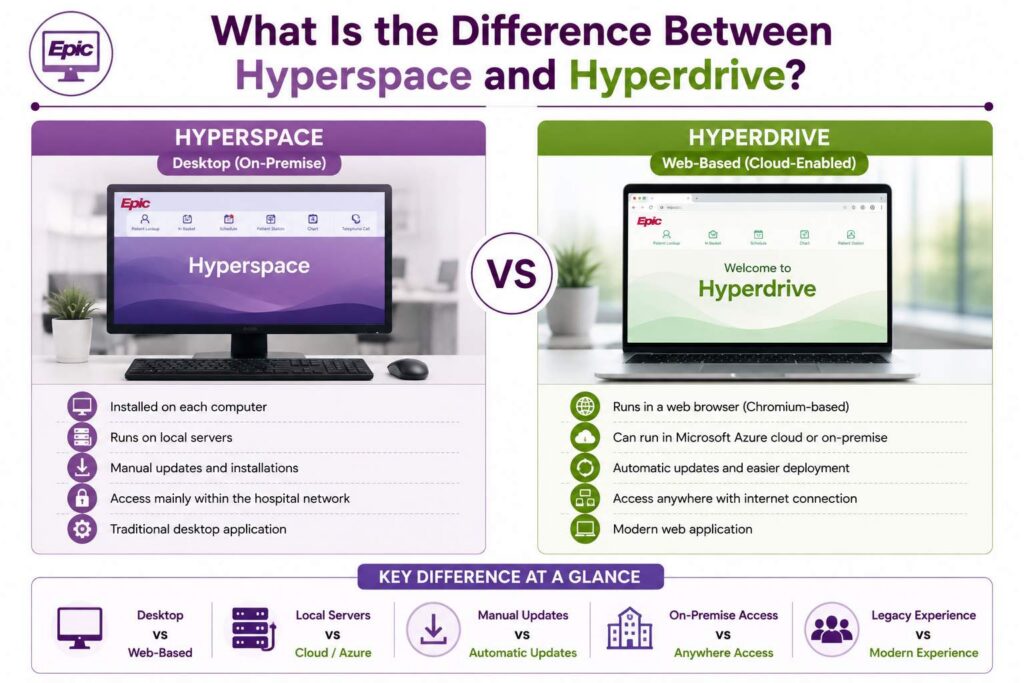
Hyperspace is the older desktop version that staff installed on each computer. Meanwhile, Hyperdrive is the newer web-based version that runs in a Chromium-based browser, making it easier to deploy, update, and access from outside the hospital.
Hyperdrive also lets Epic run in the Microsoft Azure cloud rather than only on local servers. Most organizations have now moved from Hyperspace to Hyperdrive.
What Clinical (EHR) Features Does EpicCare Offer?
EpicCare is Epic’s clinical documentation system, the part providers use to chart patient care. It comes in two forms: EpicCare Ambulatory for clinic and outpatient visits, and EpicCare Inpatient (also called ClinDoc) for hospital care.
Providers use this feature to write notes, place orders, prescribe medications, and view results, all inside the shared patient record.
EpicCare also decides how clean the billing is. Charges are built from the finished note, so the codes a provider documents become the codes on the claim. When the documentation is complete and specific, the charge is accurate.
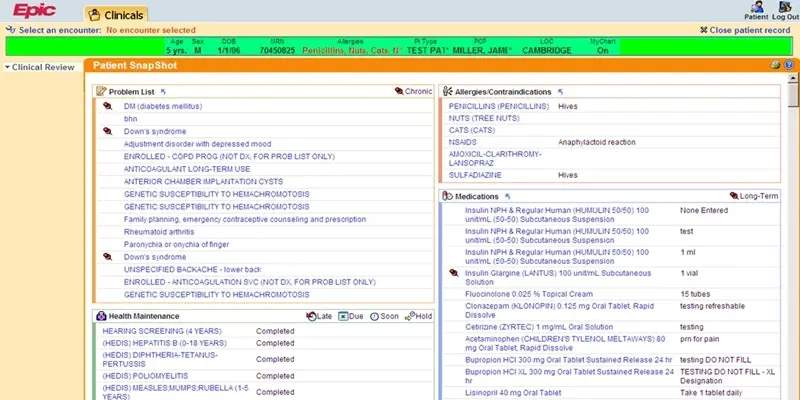
How Does Epic Handle Clinical Documentation and Charting?
Epic guides each visit through a set order of documentation steps that build the note as the provider works. The steps move in the same sequence every time:
- Chief complaint and history of present illness.
- Review of systems
- Physical exam findings
- Assessment and diagnosis
- Treatment plan and orders
To speed this up, Epic uses SmartTools like SmartPhrases and SmartText. These drop in reusable blocks of text, and SmartSets pull the common orders for a condition into one place. Providers also work from a problem list and flowsheets that track values such as vital signs over time.
Once the provider finalizes the note with its ICD-10 and CPT codes, the charge posts to Resolute automatically, with no separate billing step.
What Specialty Modules Does Epic Include?
Epic includes separate clinical modules built for specific specialties and departments. Each one adds the workflows, orders, and documentation specific to its specialty. The table below lists the main specialty modules and what each covers.
| Module | Specialty / Department |
|---|---|
| Beaker | Clinical and anatomic laboratory |
| Radiant | Radiology and imaging |
| Willow | Pharmacy (inpatient, ambulatory, and infusion) |
| Cupid | Cardiology |
| Beacon | Oncology and chemotherapy |
| OpTime | Surgery and perioperative care |
| Anesthesia | Anesthesia records |
| Stork | Obstetrics, labor, and delivery |
| ASAP | Emergency department |
| Kaleidoscope | Ophthalmology |
| Wisdom / Nova | Dental |
| Bones | Orthopedics |
| Phoenix | Transplant |
| EpicCare Home Health | Home health and hospice |
Does Epic Have Mobile Apps for Providers?
Epic gives providers mobile access through a set of apps named for their device. Each app puts the chart, results, orders, and secure messaging in the provider’s hand between visits. The four main apps are:
- Haiku, the app for iPhone and Android phones
- Canto, the app for iPad
- Limerick, the app for Apple Watch alerts
- Rover, the app for nurses, used for bedside documentation and barcode medication scanning
Together, these let providers review results, place orders, and message the care team without returning to a workstation.
Which Revenue Cycle (Resolute) Features Does Epic Offer?
Epic runs its entire revenue cycle through Resolute, the module that turns documented care into paid claims. Charges reach Resolute automatically from the clinical modules through Charge Router, so billing starts from the finished note.
The Epic revenue cycle moves through 8 connected stages, which include:
- Scheduling the visit in Cadence
- Registering the patient and insurance in Prelude
- Verifying eligibility before the visit
- Capturing charges from the clinical note
- Coding the visit with ICD-10 and CPT codes
- Scrubbing the claim against payer edits
- Submitting the claim as an 837P or 837I file
- Posting the payment, then working denials and accounts receivable
Prior authorization runs alongside these stages through Epic’s Referrals and Authorizations module. Each stage passes clean data to the next, so an error caught early keeps the claim from failing later.
Where Does Epic Tapestry Fit into the Revenue Cycle?
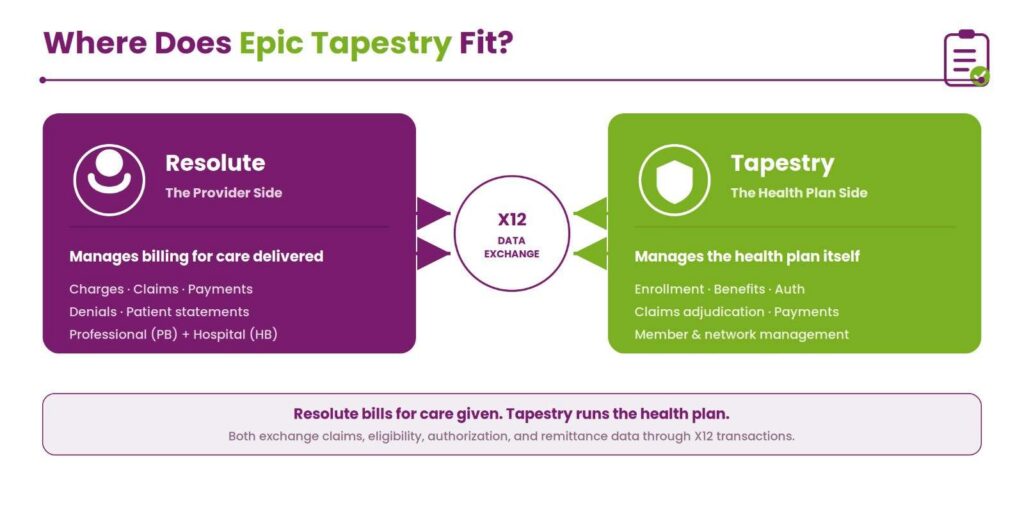
Epic Tapestry sits on the managed care and health plan side of Epic. It supports organizations that operate or manage health plans, including enrollment, benefits, authorizations, claims, and payment processes.
Tapestry can also exchange claims, eligibility, authorization, and remittance data using standard healthcare transactions such as X12. In simple terms, Resolute manages the provider’s billing side; Tapestry manages the health plan side.
What Can Patients Do Through MyChart?
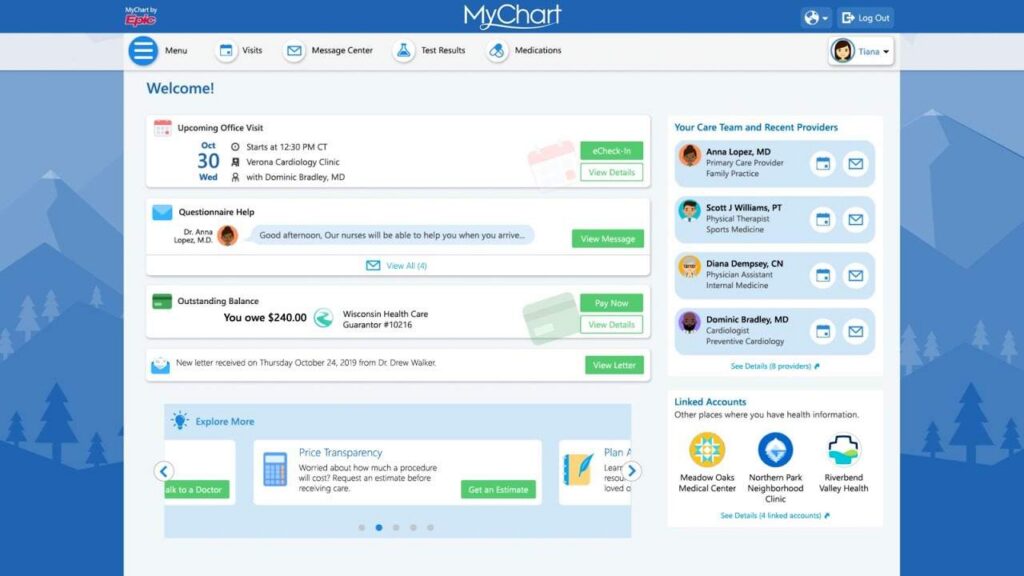
MyChart serves as Epic’s main patient-facing portal, giving patients access to many aspects of their care in one place.
Through it, patients can view test results, message care teams, schedule appointments, complete eCheck-In, join video visits, manage medications, review bills, make payments, and access health records.
Which Services Are Available in MyChart?
MyChart brings common healthcare tasks into one patient portal. Patients can review medical records and test results, send secure messages, schedule or manage appointments, and join virtual visits.
It can also complete forms and eCheck-In, and handle bills and payments. However, not every MyChart account offers the same services, as these vary by healthcare organization.
How Does MyChart Bedside Work for Hospital Patients?
MyChart Bedside is designed specifically for patients receiving care in the hospital. It gives patients real-time access to information such as their health information, care plan, care team, and education materials.
This puts useful information directly in the patient’s hands, rather than requiring them to rely entirely on printed instructions or staff updates.
How Is Epic Using AI in 2026?
Epic is embedding AI across three groups of users: clinicians, patients, and revenue cycle staff. It does this through three assistants introduced at Epic’s 2025 annual meeting: Art for clinicians, Emmie for patients, and Penny for billing.
Underneath them sits Cosmos, Epic’s medical data platform, and CoMET, a set of predictive models built on that data. According to Epic Systems, 85% of their user base is running some of these AI tools. Note that availability varies by tool, as some features are live now while others are rolling out in stages through 2026.
What Can Epic Art Do for Clinical Documentation?
Art is Epic’s AI assistant for clinicians, built to cut documentation time during the visit. It works as an ambient scribe using Microsoft’s Dragon technology, which means it listens to the visit and drafts the clinical note so the provider does not type it from scratch.
This AI tool also pulls related data from Cosmos, prepares pre-visit summaries, and surfaces diagnostic insights during the encounter.
Can Emmie Help Patients Through MyChart?
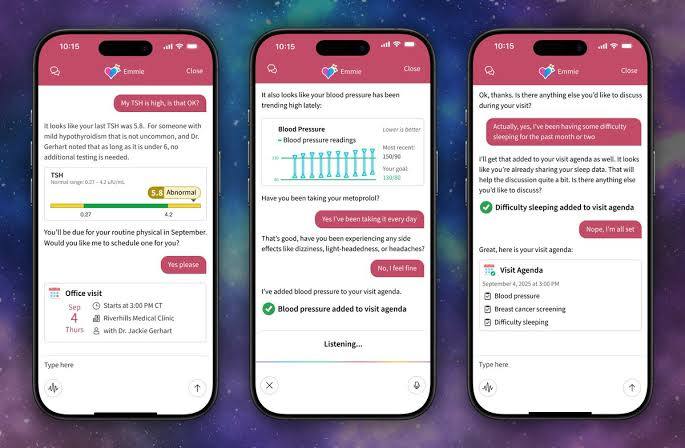
Emmie is Epic’s patient-facing AI assistant that lives inside the MyChart portal. It acts as an always-on digital concierge where patients can ask questions in plain language. Emmie explains lab results in everyday terms, recommends preventive screenings, and helps patients schedule or reschedule appointments.
It also preps patients for a visit with a personalized to-do list and, as of February 2026, offers a centralized preventive-care reminder list. Emmie can share information with Art before a visit, so the two assistants can work together to prepare both the patient and the provider.
Where Does Penny Fit Into RCM?
Penny is Epic’s AI assistant for revenue cycle teams, aimed at coding and denials. It suggests billing and medical codes to speed up coding, drafts appeal letters for denied claims, and answers staff questions about claims.
For billing teams, Penny turns Epic’s documentation into faster coding and quicker appeals. However, a practice still needs skilled billers to manage exceptions.
Why Are Cosmos and CoMET Important for Healthcare Analytics?
Cosmos is Epic’s de-identified research dataset, and CoMET is the set of AI models built on top of it. Simply put, Cosmos pools de-identified records from participating Epic organizations, covering more than 300 million patients and billions of clinical encounters.
On the other hand, CoMET, short for Cosmos Medical Event Transformer, was developed in collaboration with the Yale School of Medicine and Microsoft Research. It reads a patient’s history the way a language model reads text, then predicts likely future health events.
In testing across 78 tasks, including diagnosis prediction and disease prognosis, CoMET matched or outperformed models built for a single task. This matters because it shifts analytics from reporting on what already happened to predicting what comes next.
Can Epic Exchange Data With Other EHR Systems?
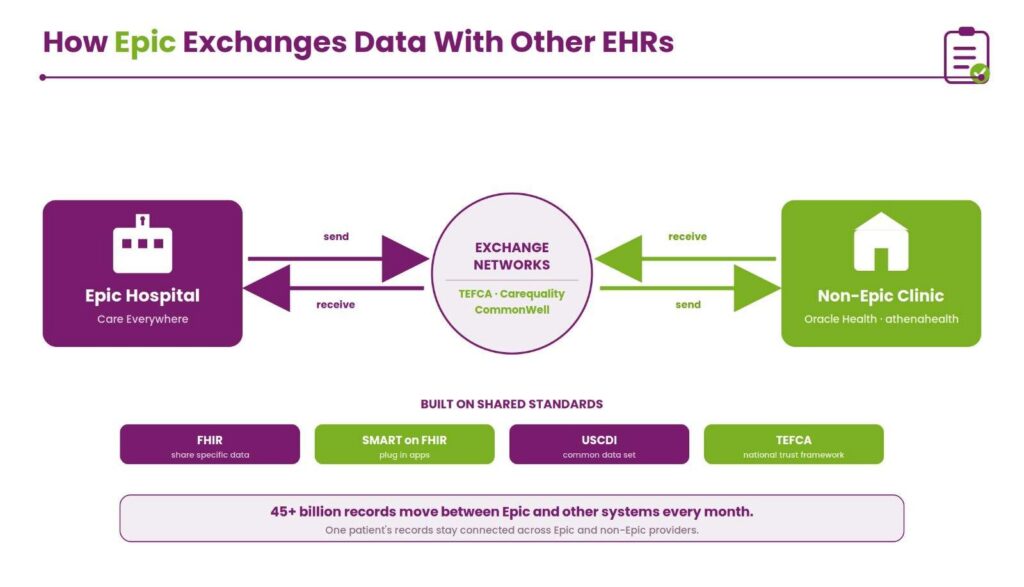
Epic exchanges patient data with other EHRs, including non-Epic systems, every day. It does this through built-in tools like Care Everywhere and through national exchange networks it participates in.
In practice, more than 45 billion records move each month between Epic and other systems, so a patient seen at an Epic hospital and a non-Epic clinic can still have their records connected.
Which Interoperability Standards Does Epic Support?
Epic supports the main national standards for health data exchange. These standards are the shared rules that let different systems read each other’s data.
The core ones Epic uses are:
- FHIR, the modern standard for sharing specific pieces of data between systems
- SMART on FHIR, which lets third-party apps plug into Epic without changing the core system
- USCDI, the federal common data set that defines what information must be shareable
- TEFCA, the national framework that connects exchange networks under one trust agreement
Because Epic builds on these open standards, an external app or system can request only the data it needs, rather than a full record dump.
Can Epic Connect with Providers Outside Its Network?
Epic connects with providers outside its own network, including those using other EHR systems. It does so by participating in large national exchange networks that link different systems. The main ones are Carequality and CommonWell Health Alliance.
Through these connections, an Epic hospital can pull records from a clinic running Oracle Health, athenahealth, or another system, and send data back the same way.
Which Reporting and Analytics Features Does Epic Provide?
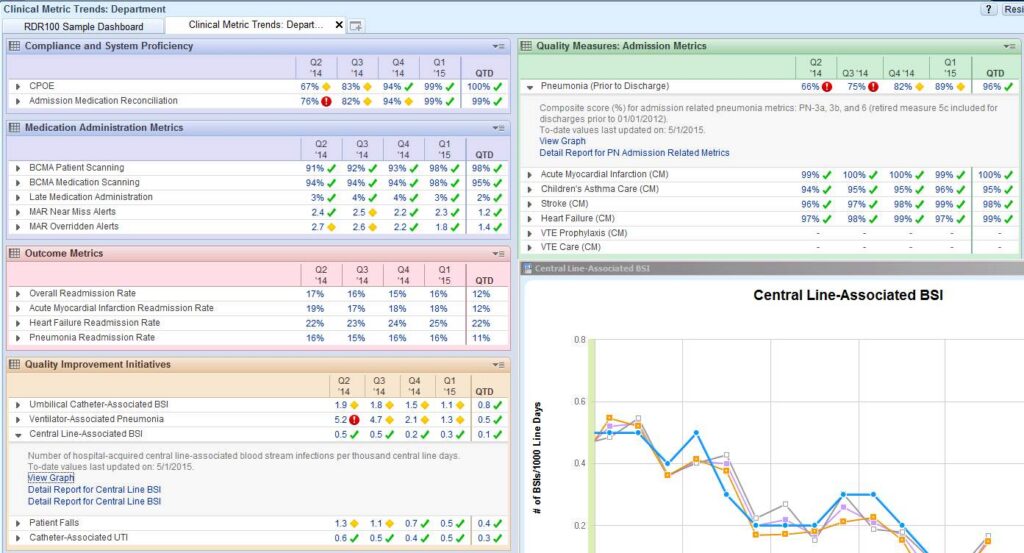
Epic EHR runs its reporting and analytics through Cogito, its umbrella program for turning stored data into reports and dashboards. Cogito is a set of tools that work together, from live operational reports to large data warehouses used for research.
Together, they enable a health system to track clinical quality, patient volume, and revenue cycle performance from the same data that runs daily operations.
What Is Included in Epic’s Cogito Platform?
Cogito includes a layered set of reporting and data tools, each built for a different job. Some pull live numbers for daily work, while others store years of data for deep analysis. The main components are:
- Reporting Workbench, for live operational reports run against the working system
- Radar, the dashboard tool that shows key metrics at a glance
- Clarity, the relational data warehouse for scheduled, in-depth reporting
- Caboodle, the newer data warehouse built for large-scale analytics
- SlicerDicer, the self-service tool that lets users explore data without writing code
A health system uses the live tools for day-to-day monitoring and the warehouses for trend analysis, quality reporting, and research. Revenue cycle teams rely on these same tools to monitor metrics such as denial rate, days in accounts receivable, and clean claim rate.
Can Epic Turn Clinical Data Into Custom Reports?
Epic turns clinical and financial data into custom reports without exporting it to another system. Because reporting runs on the same shared record as care and billing, a report can pull clinical, scheduling, and revenue data together in one place.
Reporting Workbench handles live custom reports for everyday questions, and analysts build deeper custom reports from Clarity or Caboodle when a question spans years of data. Users who do not write code can still build their own views through SlicerDicer, which uses a point-and-click interface.
How Do Clarity, Caboodle, and SlicerDicer Differ?
Clarity, Caboodle, and SlicerDicer serve three different reporting needs, from deep analysis to quick self-service. The table below shows what Clarity, Caboodle, and SlicerDicer are and what they work best for.
| Tool | What It Is | Best For |
|---|---|---|
| Clarity | Relational (SQL) data warehouse | Scheduled, detailed reports built by analysts |
| Caboodle | Newer, next-generation data warehouse | Large-scale analytics and combining data across areas |
| SlicerDicer | Self-service exploration tool | Quick, code-free analysis by everyday users |
How Much Does Epic Cost?
According to industry sources, Epic pricing runs from roughly $100,000 for a small clinic to more than $30 million for a large hospital system. Epic is privately held and does not publish a price list publicly.
The table below shows the typical ranges by organization size.
| Organization Size | Setup / Implementation | Ongoing (Annual) |
|---|---|---|
| Small Clinic | $100,000 – $300,000 | $50,000 – $150,000 |
| Mid-size Practice | $500,000 – $1,000,000 | $150,000 – $300,000 |
| Hospital / Health System | $10M – $30M+ | $1.5M – $3M |
On top of setup, Epic charges per-user licenses. A full physician license runs an estimated $5,000 to $7,000 per physician, other clinical users cost $1,200 to $3,000 each, and read-only access runs $500 to $1,000. Don’t forget the annual maintenance cost, as it adds 15% to 20% to the license cost.
Can Small and Independent Practices Use Epic?
Small and independent practices can use Epic, but rarely by buying it outright. Epic offers two scaled paths built for smaller organizations: Community Connect and Garden Plot. Both deliver Epic’s core EHR, scheduling, billing, and patient portal without the enterprise pricing tag.
So, as a small clinic, how do you decide between Community Connect and Garden Plot? The next heading answers this question.
Garden Plot vs. Community Connect: Which Option Fits Smaller Organizations?
Community Connect links the practice to a host hospital’s existing Epic system, while Garden Plot is a cloud-based version of Epic that Epic hosts directly for independent practices. In the table below, we compare the two based on various factors.
| Factor | Community Connect | Garden Plot |
|---|---|---|
| How It Works | Join a host health system’s Epic instance | Epic-hosted cloud version for independent practices |
| Best For | Practices affiliated with a hospital or health system | Independent practices with no host |
| Who Manages It | The host organization | Epic |
| Entry Cost | From about $1,200 per provider | Setup from about $10,000; from about $2,000/month |
| Trade-Off | Less control; tied to the host’s build | More independence; fewer enterprise features |
A practice already tied to a hospital network often takes Community Connect, since the host already runs Epic. However, a truly independent practice with no host leans toward Garden Plot, since Epic manages the hosting and support directly.
How Long Does an Epic Implementation Take?
An Epic implementation takes 6 to 12 months for a small practice, 12 to 18 months for a mid-size group, and 18 to 36 months for a hospital or health system. This timeline changes based on the number of modules, the depth of customization, and the number of locations going live.
Data migration is the stage that most often stretches the schedule, because cleaning up old records and duplicate patient files takes longer. It can push a project 25% to 40% past its original plan.
The clearest way to keep the timeline on track is to stick to Epic’s standard workflows in the first year and defer custom builds until after go-live. Practices that over-customize early add months to the initial project and then pay for that complexity again during every future upgrade.
You can refer to our Epic billing guide for a detailed walkthrough of the revenue cycle and the overall implementation timeline.
How Do Epic Features Compare With Oracle Health, Athenahealth, and MEDITECH?
Epic leads the hospital EHR market, and the other three serve different segments below it. Oracle Health (formerly Cerner) sits second, MEDITECH third among community hospitals, and Athenahealth competes mainly in the ambulatory and independent-practice space.
The table below compares the four on the points that matter most when choosing a system.
| Factor | Epic | Oracle Health | MEDITECH | Athenahealth |
|---|---|---|---|---|
| Acute-care hospital share (2026) | 43.7% | 21.9% | 14.7% | Minimal |
| Best Fit | Large hospitals and health systems | Hospitals, government, VA | Community hospitals | Independent and small practices |
| KLAS Standing | Top-rated in large hospitals | Lowest-rated acute EHR | Strong in community hospitals | Strong in small practice |
| Average Cost | $100K to $30M+ setup; small clinics ~$4K-$12K/mo | $2M-$5M first 3 years (mid-size hospital); ~$25/user/mo ambulatory | $200-$500 per user/mo; hospital deployments into the millions | $150-$300 per provider/mo, or a percentage of collections |
Where Does Epic Have an Advantage?
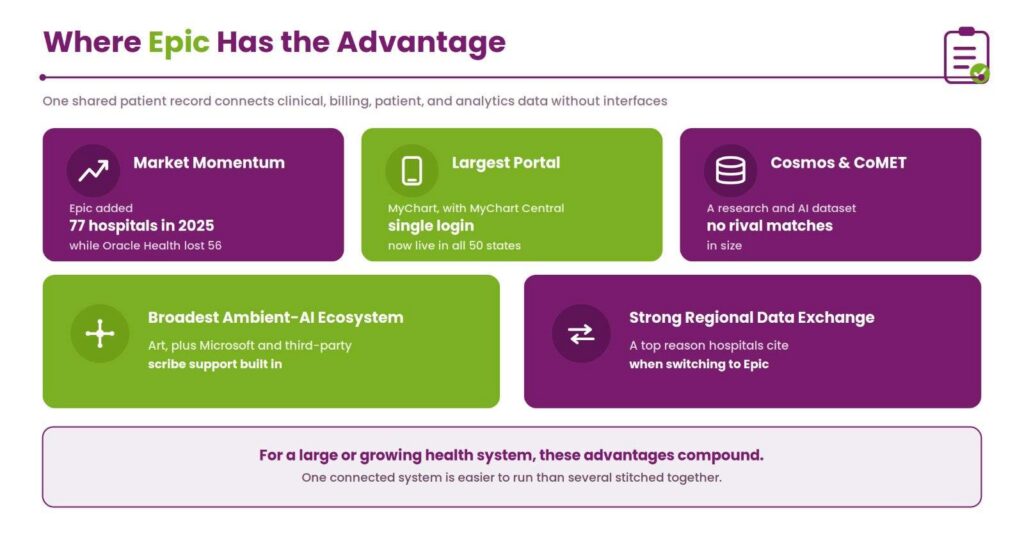
Epic’s main advantage is depth and integration at scale. Everything runs on one shared patient record, so clinical, billing, patient, and analytics data all connect without interfaces. Strengths that stand out for Epic include:
- Market momentum, since Epic added 77 acute-care hospitals in 2025 while Oracle Health lost 56
- The largest patient portal in the country, MyChart, with a single-login MyChart Central now live in all 50 states
- The Cosmos dataset and CoMET models, a research and AI asset no competitor matches in size
- The broadest ambient-AI ecosystem, with Art plus Microsoft and third-party scribe support
- Strong regional data exchange, a top reason hospitals cite for switching to Epic
For a large or growing health system, these advantages compound, since one connected system is easier to run than several stitched together.
Which Feature Gaps Show Up Most Often in Epic Reviews?
Epic’s most common complaints center on cost, complexity, and fit for smaller organizations. None are deal-breakers for a large system, but they recur in reviews and buyer discussions. The recurring ones are:
- High cost, since a full build runs $10M to $30M+
- Long implementation, often 18 to 36 months for a hospital
- A steep learning curve that requires role-based training for every user before go-live
- Heavy IT and staffing demands, including hard-to-retain Resolute-certified analysts
- Poor fit for small independent practices as a standalone product
The takeaway for a buyer is that Epic’s strengths and its complaints come from the same source. The depth that makes it powerful for a large system is also what makes it expensive and demanding to run.
Who Can Manage Epic Billing Services For Your Practice?
Healthcare organizations using Epic can either rely on their existing Epic team or work with an experienced billing partner. Transcure, a top medical billing company, provides Epic medical billing services for practices seeking experienced billing support.
Our team works within the existing Epic environment, helping manage billing activities across Resolute Professional Billing, Hospital Billing, and related revenue cycle workflows. This means your clinical and financial data can continue flowing through the same Epic system while our billing specialists handle the day-to-day work behind the scenes.
What Does Transcure Handle Inside Epic?
To keep revenue moving, Transcure pays daily attention to eligibility, charges, claims, payer responses, denials, payments, and outstanding balances. We provide trained billing professionals who manage these activities within your existing Epic workflows.
In simple terms, Transcure can support:
- Eligibility and benefits verification before scheduled services and patient visits.
- Prior authorization support for services that require payer approval before treatment.
- Charge review and entry to make sure completed services move correctly into the billing process.
- Claim preparation and submission across professional and institutional billing workflows.
- Claim status and denial follow-up to resolve payer issues and move unpaid claims forward.
- Payment posting and reconciliation to match payer payments and adjustments with the correct accounts.
- Accounts receivable follow-up focused on aging balances, high-value claims, and unresolved payer issues.
- Patient billing support for statements, balances, payment questions, and outstanding self-pay accounts.
- Revenue cycle reporting that gives practices visibility into collections, A/R, denials, and other key billing measures.
Why Use a Billing Partner Inside Epic?
Epic already provides the technology. The bigger challenge is having the right people consistently work the queues, follow up on unpaid claims, resolve denials, and keep the revenue cycle moving. Read our detailed guide on Epic EHR challenges most practices face.
Transcure provides dedicated billing support without requiring your practice to replace Epic or migrate its billing data to another platform. Your team keeps working in the system it knows while our specialists handle the revenue cycle tasks that require daily attention.
How Does Transcure Compare With Managing Epic Billing In-House?
Managing Epic billing internally gives practices direct control, but it also places the responsibility for staffing and training. An outsourced model, in contrast, adds a dedicated billing team while allowing the practice to continue using Epic.
| In-House Epic Billing | Transcure Epic Billing | |
|---|---|---|
| Epic Environment | Managed by the practice’s internal team | Works within your existing Epic environment |
| Billing Cost | $40,000+ / Biller (~7% to 10% of collections for a team) | Only 5% of collections |
| Clean Claim Rate | ~85% to 95% | Up to 99% |
| Denial Rate | ~5% to 15% | As low as 2% |
| A/R Recovery | Varies by internal team | Up to 95% |
| Billing Staff | Practice-managed team | Dedicated billing specialists & certified coders |
| Denial Management | Internal staff | Dedicated denial follow-up and resolution |
| Scalability | Higher volume may require additional hiring | Billing support can scale as volume and needs change |
What Results Can Transcure Deliver for Epic Practices?
Transcure measures revenue cycle performance through the numbers that matter most: clean claims, denials, A/R, collections, and billing costs. Across its medical billing and EHR-supported services, Transcure reports:
- 99.99% claim accuracy through automated claim validation
- Up to 99% first-pass clean claim rate
- Up to 80% fewer claim denials through proactive claim review
- 24-day A/R recovery through dedicated accounts receivable follow-up
- Up to 20% revenue improvement through faster collections
- Up to 40% reduction in A/R days by actively working aging accounts
- Up to 25% lower billing-related expenses by reducing manual work
- 1,100+ AAPC-certified billers and coders supporting billing across 40+ specialties
For your organization, Transcure can begin with a revenue cycle assessment to identify denial patterns, A/R delays, and claim issues. The team then works within the existing Epic environment to address those gaps without requiring a switch to another billing platform.
Frequently Asked Questions about Epic Features
Is Epic a Cloud-Based EHR?
Epic can run in the cloud or on a hospital’s own servers. Historically, it ran on-premises, but with the Hyperdrive interface, Epic now runs on Microsoft Azure, so newer deployments are increasingly cloud-hosted. The organization chooses the hosting model that fits its IT setup.
What Is the Difference Between Epic and EpicCare?
Epic is the whole platform, and EpicCare is one module within it. EpicCare is the clinical documentation component that providers use to chart, while other modules such as Resolute, MyChart, and Cadence handle billing, patient access, and scheduling.
Can Patients Access Epic Records from Different Hospitals in One Place?
Yes, through MyChart Central, which gives a patient a single login to view their MyChart accounts across all Epic organizations they use, instead of a separate login. MyChart Central is now live across all 50 states.
Is Epic HIPAA Compliant?
Epic is built to support HIPAA compliance, with access controls, audit logging, and encryption for protected health information. Compliance also depends on how each organization configures and uses the system, so the software enables it but does not guarantee it on its own.
Does Epic Replace a Clearinghouse?
Not usually, as Epic can connect directly to some payers, but most organizations still send claims through a clearinghouse for extra edits and payer acknowledgments. Epic handles the claim creation, and the clearinghouse handles the routing and validation layer.