eClinicalWorks (eCW) is a cloud-based EHR and practice management platform. It combines clinical documentation, revenue cycle management, and patient engagement in one system. The platform serves ambulatory practices, health centers, and health systems across the United States.
Founded in 1999, eClinicalWorks now supports more than 850,000 users and 180,000 physicians. It runs on Microsoft Azure and connects care, billing, and interoperability under a single vendor. The scale makes it one of the largest ambulatory cloud EHRs in the country.
The 2026 version of eCW centers on artificial intelligence and agentic workflows. Tools like Sunoh.ai, healow Genie, and PRISMA now automate documentation, phone calls, and record retrieval. These features change how front-office and clinical teams spend their time.
This guide covers every major feature area in eClinicalWorks. It walks through the EHR, practice management, revenue cycle management, the AI ecosystem, patient engagement, interoperability, security, and pricing.
While this guide focuses on platform capabilities, many organizations also evaluate how those capabilities translate into day-to-day revenue performance. Practices considering outsourced eCW billing services often compare the platform’s native billing tools with dedicated revenue cycle support before making a purchasing decision.
What eClinicalWorks Is and Who It Serves
eClinicalWorks is an all-in-one ambulatory platform for clinical, administrative, and financial work. It is not a single product but a suite of connected modules. Practices adopt the parts they need and add more over time.
The vendor markets eCW to a wide range of buyers. Its base tier includes a broad feature set that many competitors charge extra for. This positioning makes it a scale play for mid-to-large organizations.
eClinicalWorks fits these buyer types well:
- Federally Qualified Health Centers (FQHCs) and community health centers
- Multi-specialty groups and independent practices
- Surgery centers, ACOs, and mid-to-large ambulatory organizations
- Practices needing EHR, billing, and patient engagement from one vendor
The platform supports more than 50 medical specialties with configured templates. Specialties include Pain Management, Nephrology, Psychiatry, Cardiology, OBGYN, Orthopedics, and Primary Care. Each specialty gets workflows built for its documentation and coding patterns.
The eClinicalWorks Platform Architecture
The eCW platform is best understood as a set of layers, not a single app. Each layer handles a distinct job and shares data with the others. This shared data model is what removes manual handoffs between teams.
The eClinicalWorks Cloud sits underneath everything. Powered by Microsoft Azure, it holds the EHR, practice management, PRISMA, the patient portal, healow CHECK-IN, and all ancillary products. Access works from any device, anywhere.
The core modules of the platform:
| Module | Primary Function | Key Features |
|---|---|---|
| EHR / EMR | Clinical documentation | Progress notes, Smart Notes, e-prescribing, Eva assistant |
| Practice Management | Scheduling and front office | Calendar, waitlist, family booking, eligibility checks |
| Revenue Cycle Management | Billing and collections | Claims scrubbing, denial management, real-time adjudication |
| healow | Patient engagement | Portal, TeleVisits, reminders, healow Genie |
| PRISMA / PRISMANet | Interoperability | Record consolidation, TEFCA connectivity, care-gap detection |
| AI ecosystem | Automation | Sunoh.ai, Image AI, healow Genie, healowIQ, RPA |
Each module can run on its own or as part of the full suite. Most practices start with the EHR and practice management pairing. They then add RCM, healow, and AI tools as needs grow.
The architecture matters for procurement. Buying from one vendor reduces integration risk and vendor sprawl. It also means feature depth varies by module, which this guide breaks down next.
Understanding the platform’s strengths is only one part of the evaluation process. Buyers should also consider the most common eCW challenges, including usability, support responsiveness, billing complexity, interoperability limitations, and implementation learning curves before making a long-term EHR decision.
Clinical Documentation and EHR Features
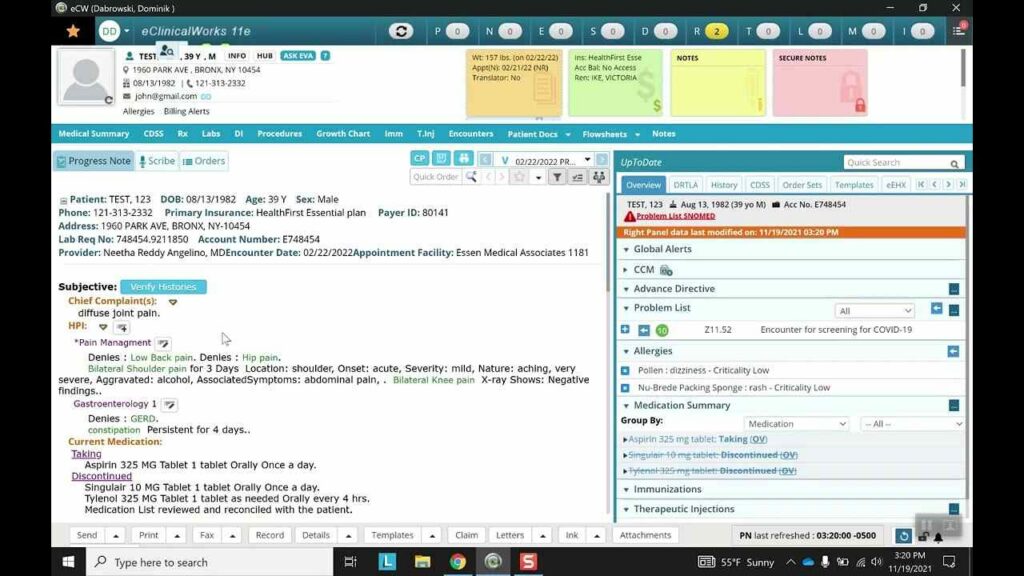
The EHR is the clinical core of eClinicalWorks. It manages progress notes, orders, medications, and the full patient chart. Version 12 (V12) reshaped the documentation flow to cut clicks and screen time.
V12 introduced Smart Notes for faster documentation and better medication management. Providers can view a patient’s previous encounters through an “Enc” tab without leaving the current note. A Treatment Timeline shows patient history in one view.
Key clinical features in the eCW EHR:
- Progress notes with specialty-specific templates and macros
- e-Prescribing at no additional cost, included in the provider fee
- Medication management with drug interaction checks
- Immunization tracking and treatment management
- Eva, the virtual assistant on the floating toolbar
- Customizable dashboards for provider workflows
Eva is the built-in virtual assistant inside the EHR. It retrieves patient information, handles scheduling, and manages routine administrative tasks. Providers reach it through the floating toolbar during any workflow.
The RX feature handles prescription work in a single place. Clinicians write, renew, and review prescriptions without switching screens. Accurate medication records reduce errors and support safer prescribing.
Specialty Configuration
eClinicalWorks ships with templates for more than 50 specialties. This depth is a core reason multi-specialty groups pick the platform. A cardiology clinic and an OBGYN practice see workflows built for their needs.
Training requirements reflect the depth of the system. Providers complete 12 to 16 hours, billers complete 12 hours, and front-office staff complete 8 hours. This investment is a real factor in go-live planning.
Practice Management and Front-Office Features
The practice management module runs the administrative side of the clinic. It handles scheduling, registration, eligibility, and the front-desk workflow. This module shares data directly with the EHR and RCM layers.
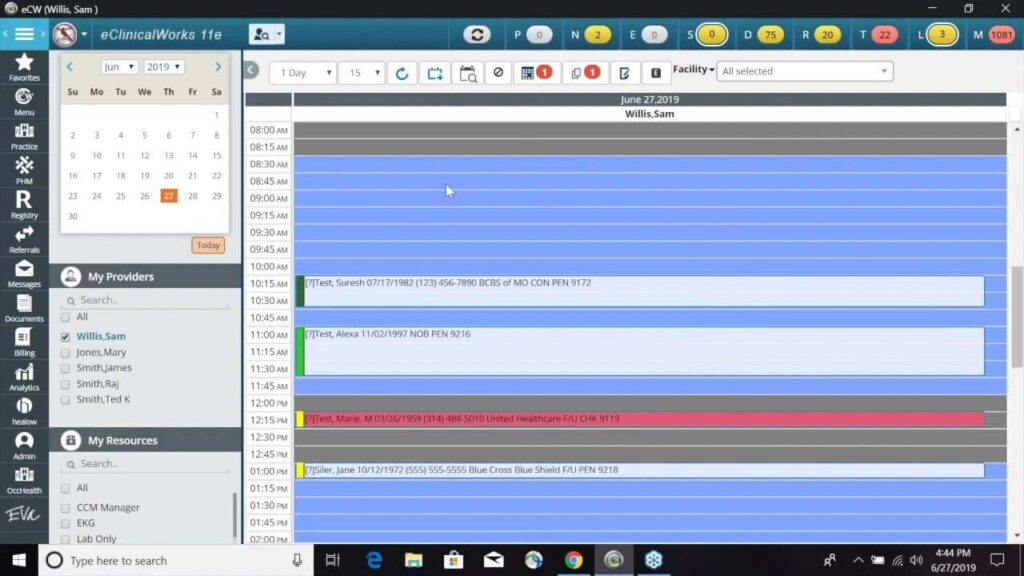
Scheduling is the daily workhorse of the front office. The calendar supports customizable views, real-time updates, and automated reminders. These reminders reduce no-shows and keep the daily schedule full.
Key practice management features in eCW:
- Customizable appointment calendar with multiple schedule views
- Family appointment booking for households in one visit
- Upgraded waitlist to fill canceled slots quickly
- Real-time insurance eligibility verification at check-in
- healow CHECK-IN for digital patient intake
- Automated Playlists for repetitive multi-screen tasks
V12 added several front-office upgrades worth noting. Family appointment booking lets staff schedule multiple household members together. Expanded schedule views and a better waitlist help fill open slots.
Automated Playlists reduce time on repetitive, manual navigation tasks. They guide staff through multi-screen workflows in a set order. This also shortens onboarding time for new front-office hires.
The front office connects directly to eligibility and billing. Verifying insurance at check-in cuts down on downstream claim rejections. Clean front-end data is the foundation of the 98%+ first-pass rate.
The eClinicalWorks AI and Agentic Ecosystem
The 2026 story at eClinicalWorks is artificial intelligence and agentic workflows. The vendor now describes its strategy as giving practices AI agents, not just more buttons. These agents handle work across the front office, exam room, and back office.
At HIMSS26, CEO Girish Navani outlined three pillars for the AI strategy. The first is front-office automation through healow Genie. The second is deep inference through Sunoh.ai. The third is native TEFCA interoperability through PRISMANet.
The eClinicalWorks AI stack at a glance:
| AI Tool | Job It Does | Reported Impact |
|---|---|---|
| Sunoh.ai | Ambient AI medical scribe | Up to 4 hours saved daily on documentation |
| PRISMA AI | External record retrieval | About 2 hours saved gathering records |
| Image AI (Fax AI) | Fax inbox management | 1+ hour saved daily on fax handling |
| healow Genie | AI contact center | Up to 80–90% of inbound calls automated |
| healowIQ | Point-of-care evidence | Peer-reviewed evidence at the point of care |
| RPA | Robotic process automation | Care-gap and coding closure with PRISMA |
These impact numbers come from a survey of nearly 900 healthcare professionals. The survey ran at the 2025 eClinicalWorks and healow National Conference. The figures explain why AI adoption is central to the current pitch.
Sunoh.ai for Ambient Clinical Documentation
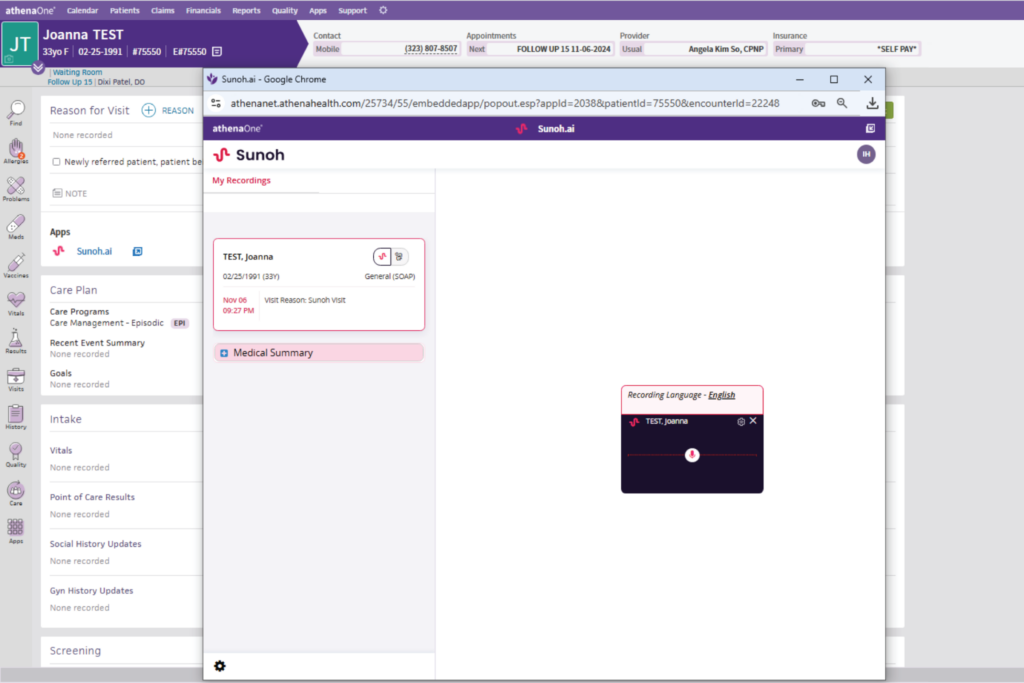
Sunoh.ai is an AI-powered ambient listening scribe developed by healow. It converts natural conversation between provider and patient into clinical documentation. The tool works during in-office visits and televisits.
In 2026, Sunoh.ai moved beyond simple transcription into deep inference. It now checks a patient’s full history in PRISMA during the exam. It then suggests real-time care plan updates at the point of care.
Where Sunoh.ai fits in the workflow:
- Fully integrated with eClinicalWorks and eClinicalTouch or eClinicalMobile
- Imports structured notes into the correct progress note sections
- Works as an independent app or inside a non-eCW EHR
- Trusted by over 90,000 providers nationwide
Real deployments show the time savings. A rural Tennessee pediatric practice reclaimed more than two hours each day with Sunoh.ai. A 76-provider FQHC in Kentucky adopted it to improve documentation quality.
healow Genie, the AI Contact Center
healow Genie is an AI-powered contact center that replaces the traditional call center. It interacts with patients by voice, text, email, or chatbot in many languages. Patients get instant answers with no hold time.
Genie handles the full front-office cycle before a patient arrives. It answers phones, schedules appointments, requests referrals, and reaches on-call providers after hours. This shifts staff away from repetitive call work.
Documented results from healow Genie deployments:
- A Maryland endocrine practice automated 80–90% of inbound calls within 2–4 weeks
- A 34-provider FQHC managed 80% of call volume and cut long wait times
- A Kansas City health center automated 90% of after-hours calls
- The same center reduced administrative burden by roughly 60%
One insight from the 2026 Health Center Summit stands out for adoption. Patient satisfaction improves when calls are answered quickly, even by an AI agent. Speed of response matters more than whether a human picks up.
PRISMA AI, Image AI, and healowIQ
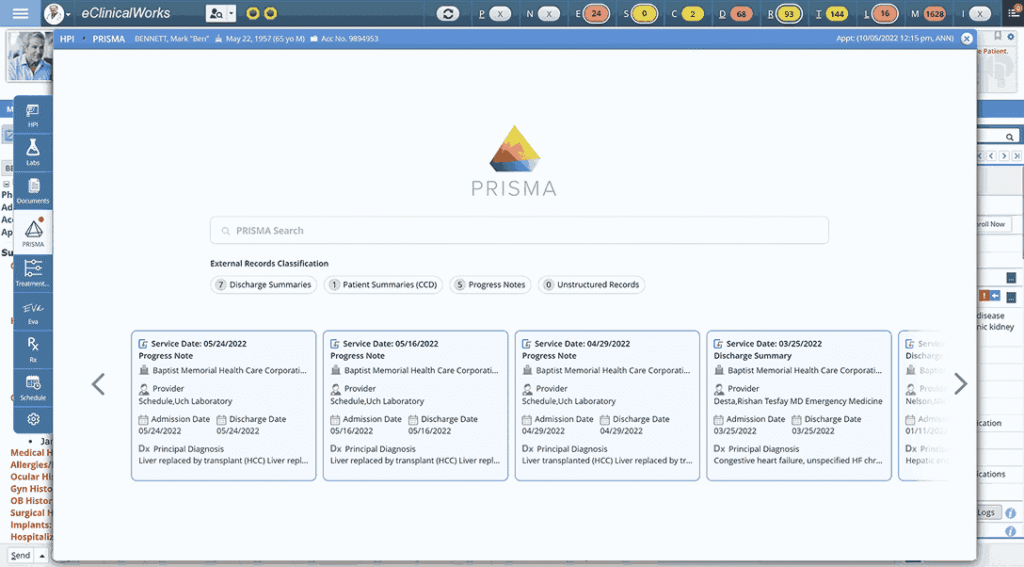
PRISMA is the health information search engine at the center of eCW interoperability. PRISMA AI retrieves and consolidates external records automatically. This cuts the time providers spend hunting for outside history.
Image AI, also called the Fax AI Assistant, manages the fax inbox. Practices receive hundreds of faxes each week, and manual sorting drains staff time. Image AI reads and routes those documents automatically.
healowIQ launched at the 2026 Health Center Summit as a point-of-care evidence tool. It gives clinicians peer-reviewed medical evidence during the visit. Clinicians can search the evidence or let healowIQ surface relevant data.
Revenue Cycle Management Features
The eClinicalWorks RCM module handles billing, claims, and collections end-to-end. Practices can run billing in-house or hand it to eCW as a service. The service model charges 2.9% of monthly collected revenue.
That 2.9% rate is a competitive differentiator in the market. Many competing RCM providers charge closer to 5% of collections. The eCW rate also bundles the full EHR suite, on-site training, and support.
Core RCM features in eClinicalWorks:
| Feature | What It Does |
|---|---|
| Claims scrubbing | Checks claims for errors before submission |
| First-pass acceptance | Reports a 98%+ first-pass acceptance rate |
| Clearinghouse integration | Uses a 6-level clearinghouse for claim routing |
| Real-time adjudication | Runs claim adjudication as claims move |
| Denial management | Works denials through a centralized queue |
| Eligibility verification | Confirms patient insurance in real time |
| Reporting and analytics | Tracks financial performance daily |
The in-house option gives practices more oversight of the billing process. Teams gain accuracy, control, and cost savings versus full outsourcing. Automation bots can also handle repetitive billing steps.
Organizations evaluating the platform’s financial capabilities can also explore our eCW billing guide, which covers claim workflows, coding, payment posting, denial management, and revenue cycle best practices beyond the feature overview presented here.
For practices that outsource, eCW assigns experienced billing professionals. These teams handle claims submission and follow-up on primary and secondary claims. Real-time insurance eligibility checks reduce front-end rejections.
AI for Revenue Cycle Management
The 2026 RCM message targets the CFO directly. eClinicalWorks now applies AI to coding, claims, and appeals. The goal is to reduce denials caused by manual errors.
The vendor frames this as turning the back office into a faster revenue engine. AI agents take over prior authorizations and claim work that once needed manual effort. This connects the RCM module to the wider agentic strategy.
One customer example shows the throughput possible. A practice managed 32,000 services and $7 million in monthly postings with just two staff members. Automation and centralized queues made that ratio workable.
Denial Management and Financial Visibility
Denial management runs through a centralized work queue in eCW. Billers filter claims, work denials, and post payments from one console. This visibility lets teams process financial performance daily.
The RCM console gives practices a live view of the revenue cycle. Users track claims, denials, and collections without leaving the platform. Real-time reporting turns billing data into daily operational decisions.
What the RCM analytics layer surfaces:
- Claim status across primary and secondary payers
- Denial reasons and trends by payer and code
- Collections performance against monthly targets
- Aging reports for outstanding accounts receivable
For an RCM leader, this reporting depth is a core selling point. It supports the daily stand-up view most billing teams now expect. Data-driven follow-up is what keeps first-pass acceptance high.
Patient Engagement with healow
healow is the consumer-facing side of eClinicalWorks. It has grown into one of the most complete patient engagement ecosystems among ambulatory EHRs. The tools connect patients to their records, providers, and appointments.
The patient portal is the central access point for patients. They view health records, check lab results, and message providers through it. This reduces phone calls and improves record transparency.
Patient engagement features in healow:
- Online appointment booking and self-scheduling
- Automated appointment reminders to reduce no-shows
- healow CHECK-IN for digital front-desk intake
- Prescription refill requests without staff involvement
- healow TeleVisits for virtual, HIPAA-compliant visits
- healow Genie for AI-driven patient communication
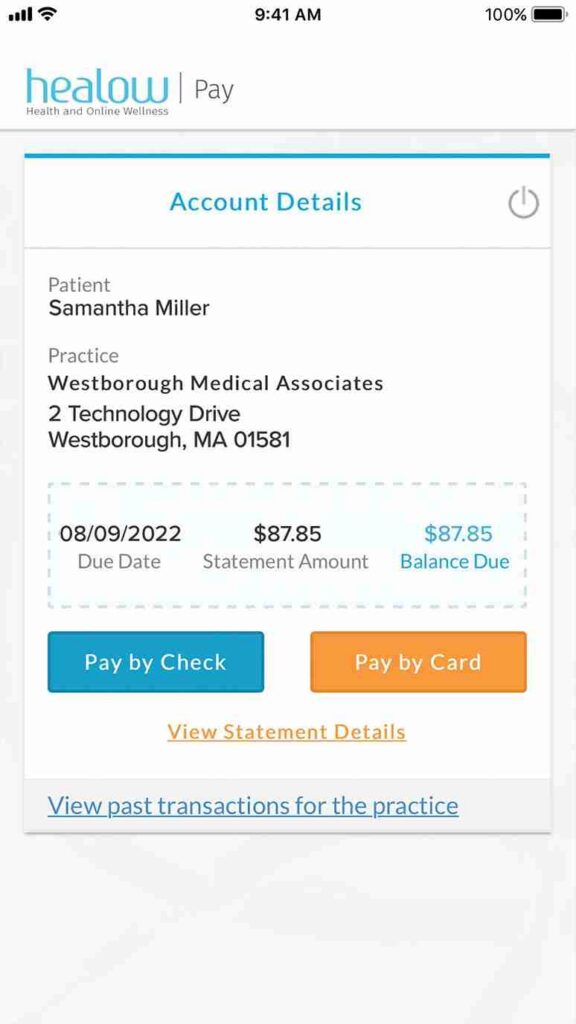
healow TeleVisits deliver telehealth at no additional cost. Visits include virtual waiting rooms, screen sharing, and integrated clinical documentation. The platform assigns billing codes automatically for virtual care.
Remote patient monitoring rounds out the engagement suite. Connected devices feed patient data back into the record. This supports chronic care programs and value-based contracts.
Interoperability and Population Health
Interoperability is a defining strength of the eClinicalWorks platform. PRISMA acts as the health information search engine that ties records together. PRISMANet connects thousands of endpoints across the country.
The vendor treats interoperability as a platform, not just a legal box to check. Native TEFCA support lets different systems share data through a common framework. This helps practices pull outside records into the chart.
Population health tools in eCW:
- HEDIS performance measures and point-of-care quality tools
- Disease Explorer to group patients into risk cohorts
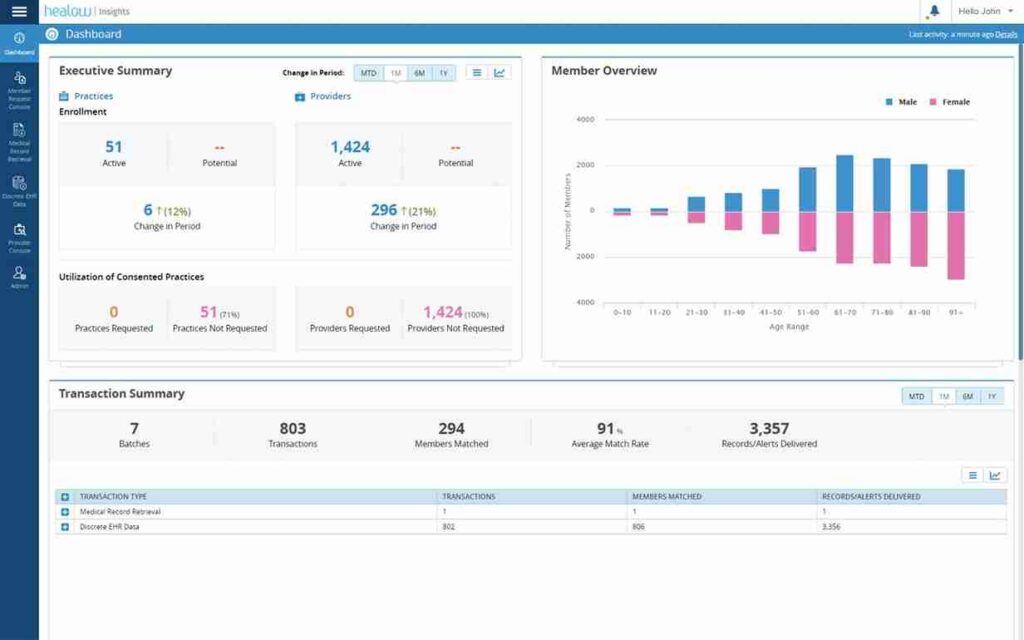
- healow Insights for automated, structured payer data exchange
- Support for ACOs, Chronic Care Management, and Patient-Centered Medical Homes
healow Insights removes a common payer headache for practices. Lab results, diagnosis codes, and quality measures once went to each payer manually. healow Insights sends this data automatically in a structured format that lowers rejection risk.
The HEDIS module and Disease Explorer help practices manage high-risk patients. Teams identify care gaps and measure compliance with treatment plans. Robotic process automation then works with PRISMA to close those gaps.
PRISMANet and TEFCA Connectivity
PRISMANet is the network layer that extends PRISMA across organizations. It connects thousands of endpoints so records follow the patient. This turns a single-practice chart into a connected care view.
TEFCA support is now native inside the platform. The Trusted Exchange Framework and Common Agreement sets national data-sharing rules. Native support means practices exchange records without custom point-to-point builds.
Why network interoperability matters for buyers:
- Outside records appear in the chart without manual faxing or chasing
- Care-gap and coding closure improves under value-based contracts
- Referrals move faster when systems share a common data path
- Data accessibility supports the CIO and CMIO agenda directly
For health systems and ACOs, this network reach shapes the buying case. Fragmented records slow care and hide revenue. A connected platform reduces both problems at once.
Security, HIPAA Compliance, and Hosting
Security in eClinicalWorks starts with the Microsoft Azure cloud. The eClinicalWorks Grid Cloud keeps patient and practice data secure and accessible. A network of data centers adds redundancy and reliability.
HIPAA compliance runs through every module that touches patient data. The vendor signs Business Associate Agreements (BAAs) with practices. Its AI tools follow administrative, physical, and technical safeguards.
Security and compliance features to verify during procurement:
- HIPAA-compliant hosting with BAA coverage
- Role-based access controls and two-factor authentication on mobile apps
- 2015 Edition Certified EHR Technology (CEHRT) status
- Encryption described as industry-standard for data in transit
A practical procurement tip applies to any AI-enabled EHR. Ask for data-flow diagrams covering audio, transcripts, and retention. Confirm how model training treats protected health information before go-live.
eClinicalWorks Pricing and Total Cost of Ownership
eClinicalWorks pricing depends on the modules and services a practice selects. Published 2026 pricing tiers run from about $449 to $599 per provider per month. RCM as a service adds 2.9% of monthly collected revenue.
That base fee covers more than many competitors include at the entry level. e-Prescribing and healow TeleVisits carry no additional cost. This all-in-one bundling shapes the total cost comparison.
Common additional costs beyond the monthly fee:
| Cost Item | Typical Range |
|---|---|
| Implementation services | $1,500–$3,500 per provider |
| Data migration | $500–$1,500 per provider |
| Go-live support | $1,000–$3,000 per day |
| Third-party integration | $500–$2,000 per integration |
| RCM onboarding | $500–$2,000 one-time |
Transaction-based fees also apply in some areas. Practices pay per patient statement and per eClinicalMessenger message. Airfare for on-site training is billed separately for larger practices.
Users describe eCW pricing as competitive for a full-featured EHR. The software cost sits on the higher side, but the lower RCM rate offsets it. Buyers should model both the per-provider fee and the collections percentage together.
How Do eClinicalWorks Features Map to Buyer Priorities?
Different buyers care about different features in a procurement. eClinicalWorks now frames its pitch around specific executive roles. Mapping features to each role speeds up internal alignment.
The vendor’s own messaging splits by title. Each executive hears how the AI and platform address their pressure point. This framing helps a champion sell the platform internally.
How eCW features answer each buyer:
- CEO: AI agents like healow Genie and Sunoh.ai act as a digital workforce, easing staffing shortages that hiring alone cannot fix.
- CFO: AI for RCM automates coding, claims, and appeals to cut denials and speed revenue.
- CIO / CMIO: PRISMANet connects thousands of endpoints, making interoperability a working platform rather than a legal requirement.
- Clinical leaders: Sunoh.ai and Eva reduce documentation load and return time to patient care.
For healthcare procurement, this mapping shortens the evaluation cycle. Committees can assign features to the stakeholder who owns each metric. That structure matters given the length of health system buying processes.
Limitations and Considerations
No EHR fits every practice, and eClinicalWorks has known trade-offs. Some users find the system heavy for certain specialty practices. Others report friction when integrating with outside medical software.
The learning curve is real given the training hours required. Providers, billers, and front-office staff all need structured onboarding. Practices should plan for productivity dips during the first weeks.
Points to weigh before selecting eCW:
- Interface feels dated to some users versus newer cloud competitors
- Specialty fit varies, so demo your exact workflows before signing
- Software cost runs higher, offset by the lower RCM rate
- Add-on and transaction fees can shift the total cost of ownership
A balanced comparison helps set expectations. Against athenahealth, eClinicalWorks offers a larger user base and lower list pricing. athenahealth often scores higher on user satisfaction and RCM experience.
The right choice depends on scale, specialty mix, and AI appetite. eCW rewards organizations that want one vendor across clinical, billing, and engagement. Smaller single-specialty practices should test fit carefully first.

Frequently Asked Questions
What Is eClinicalWorks Used For?
eClinicalWorks is used for clinical documentation, scheduling, billing, and patient engagement. Practices manage the full patient journey in one cloud platform. It serves ambulatory practices, health centers, and health systems.
Is eClinicalWorks a Good EHR for Revenue Cycle Management?
eClinicalWorks RCM reports a 98%+ first-pass acceptance rate and a 6-level clearinghouse. Its service model charges 2.9% of monthly collected revenue. That rate sits below the roughly 5% many competitors charge.
What AI Features does eClinicalWorks Offer?
The platform includes Sunoh.ai for documentation, healow Genie for phone automation, and PRISMA AI for records. It also offers Image AI for fax management and healowIQ for point-of-care evidence. These tools form an agentic AI ecosystem.
How Much Does eClinicalWorks Cost?
Published 2026 pricing runs from about $449 to $599 per provider per month. RCM as a service adds 2.9% of monthly collections. Implementation, migration, and go-live support carry separate fees.
Does eClinicalWorks Support Telehealth?
Yes, healow TeleVisits provide HIPAA-compliant video visits at no extra cost. Visits include virtual waiting rooms, screen sharing, and integrated documentation. Billing codes are assigned automatically for virtual care.
How Many Specialties Does eClinicalWorks Support?
eClinicalWorks includes configured templates for more than 50 specialties. These cover Pain Management, Nephrology, Psychiatry, Cardiology, OBGYN, and Orthopaedics. Each specialty gets workflows built for its documentation needs.
Does eClinicalWorks Support Interoperability and TEFCA?
Yes, PRISMA and PRISMANet connect thousands of endpoints for record sharing. The platform now supports TEFCA natively for national data exchange. This lets outside records appear in the chart without manual faxing.