
CPT code 80307 is a presumptive drug test code used to report drug screening performed by an immunoassay method using an instrumented chemistry analyzer. It is typically billed when a provider orders a urine or other specimen drug screen to detect the presence of specific drug classes as part of clinical decision-making.
This code is commonly used in pain management, behavioral health, emergency medicine, and primary care settings for rapid screening purposes.
What Is the Description of CPT Code 80307?
CPT code 80307 is defined by the AMA as: “Drug test(s), presumptive, any number of drug classes; by instrumented chemistry analyzers (eg, immunoassay), per date of service.”
Specimen Collection and Turnaround
- Specimen Types Accepted: Urine, oral fluid, other, list typical ones and indicate payer/lab preferences.
- Collection Requirements: Labeling, date/time of collection, collector signature/ID, source of specimen.
- Chain-of-Custody / Forensic Requirements (when applicable): Mention custody form, witness, and sealing.
- Specimen Handling and Transport: Temperature, preservatives (if applicable), courier notes.
- Turnaround/Processing Time Guidance: Typical lab turnaround expectations (verify with lab), and note to always document collection timestamp.
What are the Modifiers for CPT Code 80307?
80307 CPT code is most commonly billed without modifiers, but certain situations require modifiers depending on payer policy.
Modifier 90: Reference (Outside) Laboratory
Modifier 90 is used when the CPT code 80307 is performed by an outside/reference laboratory rather than the billing provider’s lab. Use this modifier when the specimen is sent out, and the billing entity is reporting the reference lab service. Documentation must show the performing lab and the test report source.
Modifier 91: Repeat Clinical Diagnostic Laboratory Test
Modifier 91 is used when CPT code 80307 is repeated on the same date of service for medically necessary reasons. Do not use modifier 91 to correct errors or rerun the test due to specimen issues. The chart must document why repeating the presumptive drug screen was clinically necessary.
Which Documents Are Required For CPT Code 80307?
Documentation for CPT code 80307 must support medical necessity, test performance, and the reported result.
Required documents checklist:
- Provider order for presumptive drug testing
- Medical necessity documentation (reason for drug screen)
- Specimen type and collection date/time
- Lab test method identification (instrumented chemistry analyzer/immunoassay)
- Lab result report (positive/negative by drug class)
- Reflex/confirmatory testing order if definitive testing is requested
- CLIA certification documentation (if required by payer)
- Provider signature and dated record entry
What is the Cost of CPT Code 80307?
The cost for CPT code 80307 is dependent on where the procedure was performed and if the payer is commercial or public.
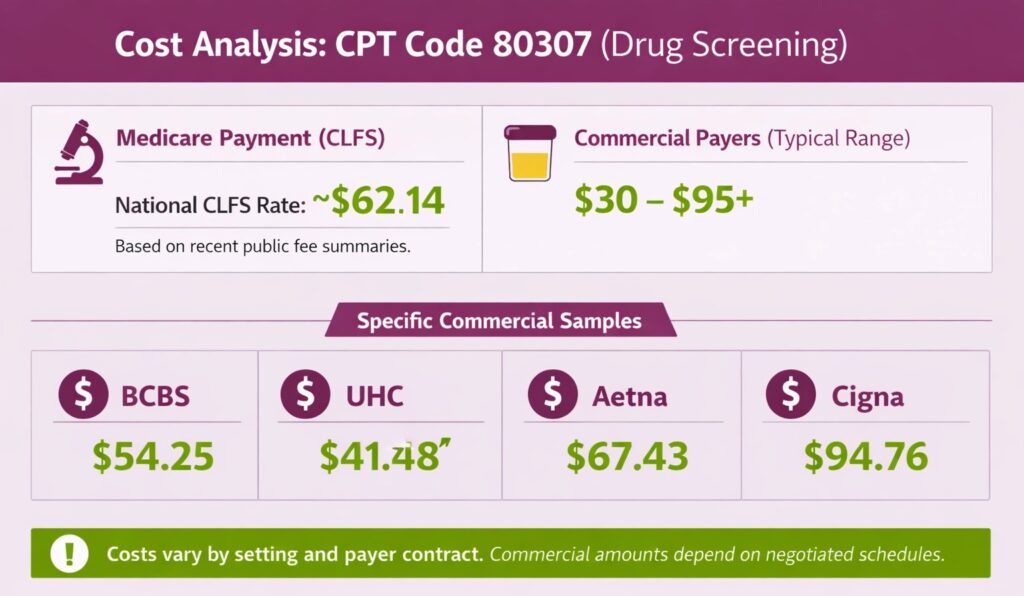
CLFS & Medicare Payment
Under the Clinical Laboratory Fee Schedule (CLFS), CPT code 80307 is paid at a nationally published CLFS rate. These are commonly reported at around $62.14 in recent public fee summaries.
Commercial Payers
Commercial allowed amounts vary widely. Market data show negotiated pay commonly ranges from about $30 up to $95+, depending on the insurer and contract. For example, the most recent amounts paid are BCBS $54.25, UnitedHealthcare $41.48, Aetna $67.43, and Cigna $94.76.
Place-of-Service & Lab Setting Differences
Payment differs by setting. Independent/reference labs are usually paid per CLFS, hospital outpatient, or facility providers often have different contracted rates, and state Medicaid fee schedules may set separate amounts.
What Are Example Clinical Scenarios or Use Cases for CPT Code 80307?
CPT code 80307 is commonly used when a provider orders a presumptive drug screen to quickly identify the presence of one or more drug classes for clinical decision-making.
Scenario 1: Chronic Opioid Therapy Monitoring In Pain Management
ICD-10: Z79.891 (Long-term [current] use of opiate analgesic)
This diagnosis supports CPT code 80307 because routine monitoring for compliance and non-prescribed drug use is medically necessary during long-term opioid therapy.
Scenario 2: Substance Use Disorder Follow-Up Visit
ICD-10: F11.20 (Opioid dependence, uncomplicated)
This diagnosis supports CPT code 80307 because presumptive screening is commonly required to detect ongoing opioid use or relapse during substance use treatment.
Scenario 3: Suspected Overdose Or Intoxication Evaluation
ICD-10: T40.2X1A (Poisoning by other opioids, accidental [unintentional], initial encounter)
This diagnosis supports CPT code 80307 because rapid presumptive drug screening is used to guide immediate treatment decisions during suspected opioid toxicity.
What Are the CPT Code 80307 Rules To Ensure Successful Reimbursement?
Follow payer lab rules, CLFS guidance, and proper documentation (order, specimen, method, result) to secure payment for the CPT code 80307. Accurate documentation is essential because the CPT code in medical billing is used to standardize the reporting of procedures and ensure proper reimbursement from insurance providers.
Bundling / One-per-Date / Reflex Testing Rules
CPT code 80307 is billed once per date of service for presumptive, instrumented drug class screening and should not be billed multiple times for the same specimen on the same date unless clinically justified.
If a presumptive screen triggers definitive/confirmatory testing, report the confirmatory test separately only when payer rules allow separate payment. Moreover, documentation must show a valid medical rationale and distinct test methodology.
Do not bill 80307 when the presumptive screen is bundled into another payable service per payer/NCCI edits.
Units, MUEs & Frequency Limits
Most payers and MUE tables limit CPT code 80307 to one unit per patient per date of service. When repeats are clinically necessary, document the reason clearly and append the appropriate repeat or reference-lab modifier per payer policy.
Top Reasons For Denials Specific To 80307 & Quick Remedies
- Missing or Unsigned Physician Order: Add a dated/signed order or contemporaneous physician note ordering the presumptive screen and link it to the clinical indication.
- No Specimen Documentation Or Chain-Of-Custody When Required: Attach collection time, specimen type, collector identity (or COC form), and receipt/processing timestamps.
- Duplicate Billing / Multiple Units Billed For Same Date Without Justification: Submit a corrected claim with one unit or include documentation showing medical necessity for repeat testing, and use modifier 91 if applicable.
- Confirmatory Testing Billed Incorrectly Or Bundled: Show the presumptive result, the medical reason for confirmatory testing, distinct assay methods, and payer rules that permit separate payment.