Do you know that bronchoscopy has more than 30 CPT codes, whereas pulmonary function testing (PFT) has 20? Now add sleep medicine, pulmonary rehabilitation, respiratory therapy, and critical care, and this number jumps up to over 100 pulmonology CPT codes. This makes pulmonology one of the most detailed coding specialties.
However, pulmonary CPT codes are only one part of the process. CMS also requires medical necessity, accurate diagnosis linkage, proper modifiers, and supporting documentation before many respiratory services qualify for reimbursement. Miss even one and your payments are delayed, or claims are denied altogether.

After reading this guide, you won’t have a problem with pulmonology CPT codes anymore, as we brought everything together in one place. In this cheat sheet, you’ll find more than 70 CPT codes with modifiers that can improve reimbursements for your pulmonary practice. Even if you use a specialized pulmonology billing service, keep this coding list as a reference.
Pulmonology CPT Codes Cheat Sheet for 2026 (70+ Codes)
The table below is a quick overview of the common pulmonology CPT codes that you’ll encounter and use in 2026, along with descriptions, categories, and modifiers.
| Code | Descriptor | Category | Common Modifier |
|---|---|---|---|
| 94010 | Spirometry, including graphic record, total and timed vital capacity | Pulmonary Function Test | 25 |
| 94060 | Spirometry, pre- and post-bronchodilator administration | Pulmonary Function Test | 25 |
| 94070 | Bronchospasm provocation evaluation, multiple spirometric determinations | Pulmonary Function Test | 25 |
| 94150 | Vital capacity, total (separate procedure) | Pulmonary Function Test | 25 / 59 |
| 94200 | Maximum breathing capacity, maximal voluntary ventilation | Pulmonary Function Test | 25 / 59 |
| 94375 | Respiratory flow volume loop | Pulmonary Function Test | 59 |
| 94726 | Plethysmography for determination of lung volumes | Pulmonary Function Test | 59 |
| 94727 | Gas dilution or washout for determination of lung volumes | Pulmonary Function Test | 59 |
| 94728 | Airway resistance by impulse oscillometry | Pulmonary Function Test | 59 |
| 94729 | Diffusing capacity, e.g., carbon monoxide, single breath (DLCO) | Pulmonary Function Test | 59 |
| 94750 | Pulmonary compliance study, e.g., plethysmographic determination | Pulmonary Function Test | 25 |
| 94620 | Pulmonary stress testing, complex, including CO2 production, O2 uptake, and ECG | Pulmonary Function Test | 25 |
| 95012 | Nitric oxide expired gas determination | Pulmonary Function Test | 25 / 59 |
| 94760 | Pulse oximetry, single determination | Diagnostic Monitoring | 59 |
| 94761 | Pulse oximetry, multiple determinations | Diagnostic Monitoring | 59 |
| 94762 | Pulse oximetry, continuous overnight recording | Diagnostic Monitoring | 59 |
| 36600 | Arterial puncture, withdrawal of blood for blood gas analysis | Diagnostic Monitoring | 59 |
| 82803 | Blood gases, pH, CO2, O2, HCO3, and O2 saturation panel | Diagnostic Monitoring | – |
| 31622 | Bronchoscopy, diagnostic, with cell washing when performed (separate procedure) | Bronchoscopy | 59 |
| 31623 | Bronchoscopy with brushing or protected brushings | Bronchoscopy | 59 |
| 31624 | Bronchoscopy with bronchoalveolar lavage (BAL) | Bronchoscopy | 59 |
| 31625 | Bronchoscopy with bronchial or endobronchial biopsy(s), single or multiple sites | Bronchoscopy | 59 |
| 31626 | Bronchoscopy with placement of fiducial marker(s) | Bronchoscopy | 59 |
| 31628 | Bronchoscopy with transbronchial lung biopsy(s), single lobe | Bronchoscopy | 59 |
| 31629 | Bronchoscopy with transbronchial needle aspiration biopsy(s), trachea/mainstem/lobar bronchus | Bronchoscopy | 59 |
| 31630 | Bronchoscopy with tracheal or bronchial dilation or closed reduction of fracture | Bronchoscopy | 59 |
| 31631 | Bronchoscopy with placement of tracheal stent(s) | Bronchoscopy | 59 |
| 31632 | Bronchoscopy, transbronchial lung biopsy, each additional lobe (add-on) | Bronchoscopy | 59 |
| 31633 | Bronchoscopy, transbronchial needle aspiration biopsy, each additional lobe (add-on) | Bronchoscopy | 59 |
| 31635 | Bronchoscopy with removal of foreign body | Bronchoscopy | 59 |
| 31636 | Bronchoscopy with placement of bronchial stent(s), initial bronchus | Bronchoscopy | 59 |
| 31638 | Bronchoscopy with revision of bronchial stent(s) | Bronchoscopy | 59 |
| 31640 | Bronchoscopy with excision of tumor or relief of stenosis | Bronchoscopy | 59 |
| 31641 | Bronchoscopy with destruction of tumor or relief of stenosis | Bronchoscopy | 59 |
| 31645 | Bronchoscopy with therapeutic aspiration of airway, initial | Bronchoscopy | 59 |
| 31646 | Bronchoscopy with therapeutic aspiration of airway, subsequent (add-on) | Bronchoscopy | 59 |
| 31651 | Bronchoscopy with insertion of endobronchial valve(s), each additional lobe (add-on) | Bronchoscopy | 59 |
| 31652 | Bronchoscopy with EBUS, lymph node sampling, 1-2 mediastinal/hilar stations | EBUS Procedures | 59 |
| 31653 | Bronchoscopy with EBUS, lymph node sampling, 3 or more stations | EBUS Procedures | 59 |
| 31654 | Bronchoscopy with EBUS for peripheral lesion(s) (add-on) | EBUS Procedures | 59 |
| 95800 | Sleep study, unattended, heart rate, oxygen saturation, respiratory analysis, and sleep time | Sleep Study | 26 / TC |
| 95801 | Sleep study, unattended, heart rate, oxygen saturation, and respiratory analysis (no sleep time) | Sleep Study | 26 / TC |
| 95805 | Multiple sleep latency or maintenance of wakefulness testing | Sleep Study | 26 / TC |
| 95806 | Sleep study, unattended, respiratory effort, airflow, and oxygen saturation | Sleep Study | 26 / TC |
| 95807 | Sleep study, attended by technologist | Sleep Study | 26 / TC |
| 95808 | Polysomnography, attended, 1-3 parameters of sleep | Sleep Study | 26 / TC |
| 95810 | Polysomnography, attended, 4 or more parameters, age 6 years or older | Sleep Study | 26 / TC |
| 95811 | Polysomnography, attended, 4 or more parameters, with CPAP titration | Sleep Study | 26 / TC |
| 99291 | Critical care, evaluation and management, first 30-74 minutes | Critical Care | 25 |
| 99292 | Critical care, each additional 30 minutes (add-on) | Critical Care | – |
| 71271 | Low-dose CT scan of the chest (thorax) without contrast for lung cancer screening | Lung Cancer Screening | 26 / TC |
| 94002 | Ventilator management, hospital inpatient/observation, initial day | Ventilator Management | 25 |
| 94003 | Ventilator management, hospital inpatient/observation, each subsequent day | Ventilator Management | 25 |
| 94004 | Ventilator management, nursing facility, each day | Ventilator Management | 25 |
| 94005 | Home ventilator management care plan oversight, 30 minutes or more | Ventilator Management | 25 |
| 32554 | Thoracentesis, needle or catheter, without imaging guidance | Pulmonary Procedures | 59 |
| 32555 | Thoracentesis, needle or catheter, with imaging guidance | Pulmonary Procedures | 59 |
| 32550 | Insertion of indwelling tunneled pleural catheter | Pulmonary Procedures | 59 |
| 32552 | Removal of indwelling tunneled pleural catheter | Pulmonary Procedures | 59 |
| 32560 | Instillation of agent for pleurodesis, e.g., talc | Pulmonary Procedures | 59 |
| 99202–99205 | Office visit, new patient (straightforward to high complexity MDM, or 15–74 minutes depending on level) | Evaluation & Management | 25 |
| 99212–99215 | Office visit, established patient (straightforward to high complexity MDM, or 10–54 minutes depending on level) | Evaluation & Management | 25 |
| 99421–99423 | Online digital evaluation and management (E-Visits) | Telemedicine | 95 |
Note: CPT codes 95800, 95801, and 95806 are scheduled for deletion effective January 1, 2027, per the AMA CPT Editorial Panel. They remain valid and billable through the end of 2026.
What are Pulmonary Function Test (PFT) CPT Codes?
Pulmonary Function Test (PFT) CPT codes report diagnostic tests that evaluate how well the lungs work. Physicians use these codes to diagnose, monitor, and manage conditions such as COPD, asthma, pulmonary fibrosis, and other respiratory disorders.
Below are the most commonly reported PFT CPT codes with average reimbursement and requirements.
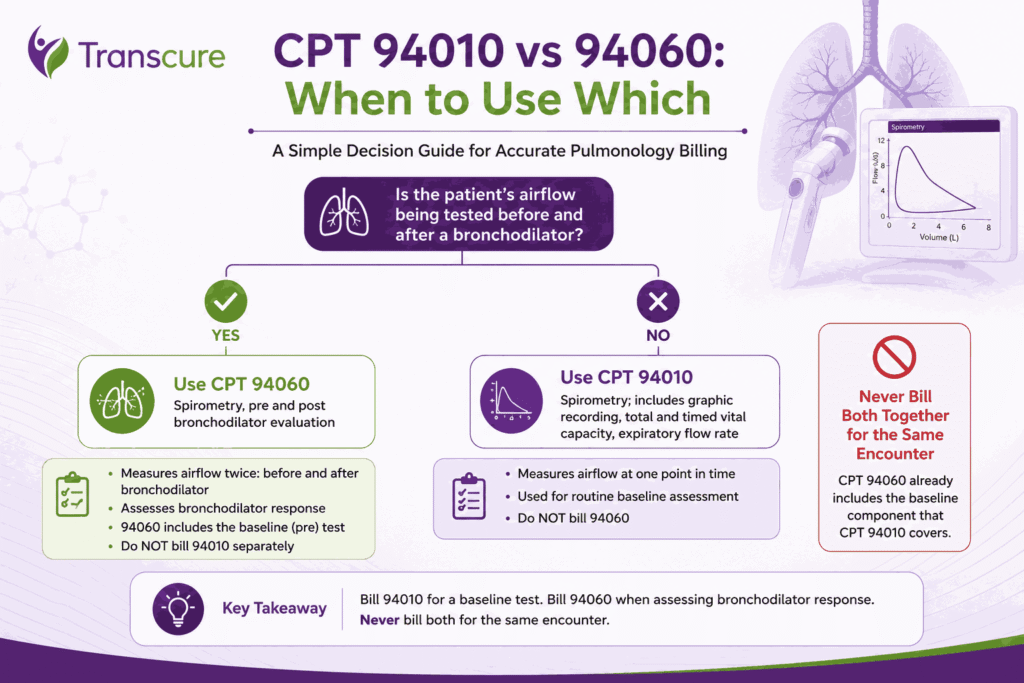
CPT 94010: Diagnostic Spirometry
CPT 94010 reports diagnostic spirometry with a graphic record, including total and timed vital capacity measurements. It is one of the most commonly reported pulmonary function test codes and is used to evaluate conditions such as COPD, asthma, and chronic bronchitis.
The physician should document the interpretation of the test results in the medical record. If a separately identifiable office visit is performed during the same day, the E/M service must be reported with modifier 25.
CPT 94060: Bronchodilator Responsiveness Testing
94060 CPT code is used for spirometry performed before and after bronchodilator administration. It helps determine if airway obstruction improves after medication and is commonly used when evaluating asthma or differentiating it from COPD.
This code already includes both spirometry tests. Do not report CPT 94010 separately in the same encounter, as it is included in CPT 94060.
CPT 94726: Lung Volume Measurement by Body Plethysmography
CPT code 94726 covers lung volume measurement using body plethysmography. It measures total lung capacity, residual volume, and other lung volumes that routine spirometry cannot calculate.
The medical record should also support the need for lung volume testing and include the physician’s interpretation. This code is commonly billed with other pulmonary function tests when medically necessary.
CPT 94729: Diffusing Capacity (DLCO) Testing
94729 CPT code reports diffusion capacity testing, commonly known as DLCO. This study measures how efficiently oxygen moves from the lungs into the bloodstream. It is commonly performed for pulmonary fibrosis, emphysema, interstitial lung disease, and unexplained dyspnea.
The documentation should include the clinical indication for the test and a complete interpretation of the findings. Also, ask the patient to avoid smoking (if they do) before testing, as it may affect DLCO results.
CPT 94621: Cardiopulmonary Exercise Testing (CPET)
94621 CPT code covers cardiopulmonary exercise testing (CPET) with physician supervision and interpretation. You can use this code for unexplained exercise intolerance, pulmonary hypertension, and advanced respiratory disease.
The report should document the exercise protocol, monitoring performed, and the physician’s final interpretation.
CPT 94727: Lung Volume Measurement by Gas Dilution or Gas Washout
CPT 94727 reports lung volume measurement using gas dilution or gas washout techniques. Commonly used when body plethysmography is unavailable or when an alternative measurement method is clinically appropriate.
Only the lung volume measurement method actually performed should be reported for the encounter. Also document the testing method and interpretation of the results.
What Are the CPT Codes for Critical Care & Imaging?
Critical care and imaging CPT codes are commonly reported by pulmonology patients with severe respiratory conditions. These services include emergency critical care management and low-dose CT scans used for lung cancer screening.
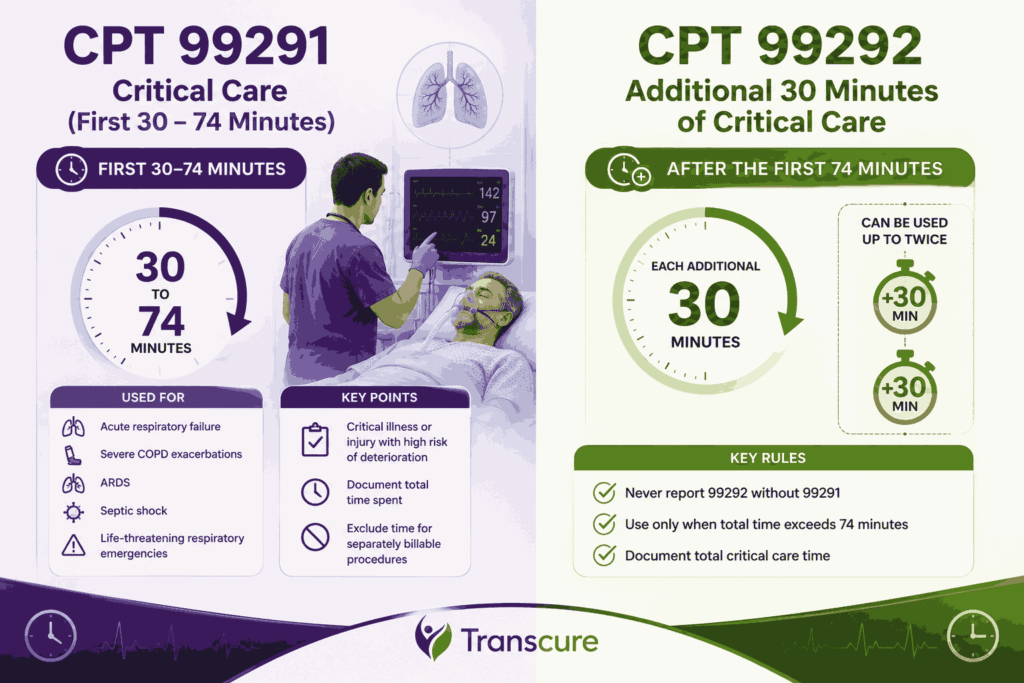
CPT 99291: Critical Care (First 30 – 74 Minutes)
CPT code 99291 reports the first 30 to 74 minutes of critical care provided to a critically ill or critically injured patient. It covers conditions such as acute respiratory failure, severe COPD exacerbations, ARDS, septic shock, and other life-threatening respiratory emergencies.
The documentation must clearly support critical care and record the total time spent delivering these services. Time spent performing separately billable procedures cannot be counted toward critical care time.
CPT 99292: Additional 30 Minutes of Critical Care
99292 CPT code is an add-on used for reporting each additional 30 minutes of critical care after the initial time billed with CPT 99291.
Never report 99292 without 99291 or bill it when the documented time does not exceed 74 minutes. Always document the total critical care time before reporting this add-on. These can be used twice as well if the time exceeds 1 hour after 74 minutes.
CPT 71271: Low-Dose Lung Cancer Screening
CPT code 71271 covers a low-dose CT (LDCT) scan performed without contrast for lung cancer screening in eligible high-risk patients. Unlike diagnostic chest CT scans, this code is used only for preventive screening and is subject to specific coverage requirements.
Documentation should support the patient’s screening eligibility, smoking history, and the physician’s written order. Many payers also require documentation of a shared decision-making visit before the initial screening.
Since this is an annual screening service, confirm that the frequency limit has not already been exceeded before submitting the claim.
Which Bronchoscopy CPT Codes Are Commonly Used?
Bronchoscopy CPT codes report diagnostic and therapeutic procedures performed inside the trachea and bronchial tree using a flexible or rigid bronchoscope. The correct code here depends on the procedure, samples, and use of advanced techniques.
Common CPT codes for bronchoscopy that you might encounter during your practice include:
CPT 31622: Diagnostic Bronchoscopy
31622 CPT code reports a diagnostic bronchoscopy with or without cell washing. It is the base code for a routine airway examination when no separately reportable sampling or therapeutic procedure is performed.
Don’t use this 31622 code when another bronchoscopy procedure such as a biopsy, bronchoalveolar lavage (BAL), or EBUS sampling is performed. The diagnostic bronchoscopy is already included in those procedures.
CPT 31623: Bronchial Brushing
CPT code 31623 reports bronchial brushing performed to obtain cytology specimens from the airway.
The procedure note should identify the brushing site and confirm that a brush specimen was collected. Routine cell washing performed during a diagnostic bronchoscopy does not qualify for CPT 31623.
CPT 31624: Bronchoalveolar Lavage (BAL)
CPT code 31624 covers bronchoscopy with bronchoalveolar lavage (BAL). The procedure uses sterile saline to collect cells and fluid from the lower respiratory tract for laboratory analysis. Commonly performed to evaluate pulmonary infections, interstitial lung disease, and diffuse lung infiltrates.
When you make the procedure note, it should clearly document that a true BAL was performed. Simple bronchial washing does not support CPT 31624 and leads to denials. It can only be reported once per lobe.
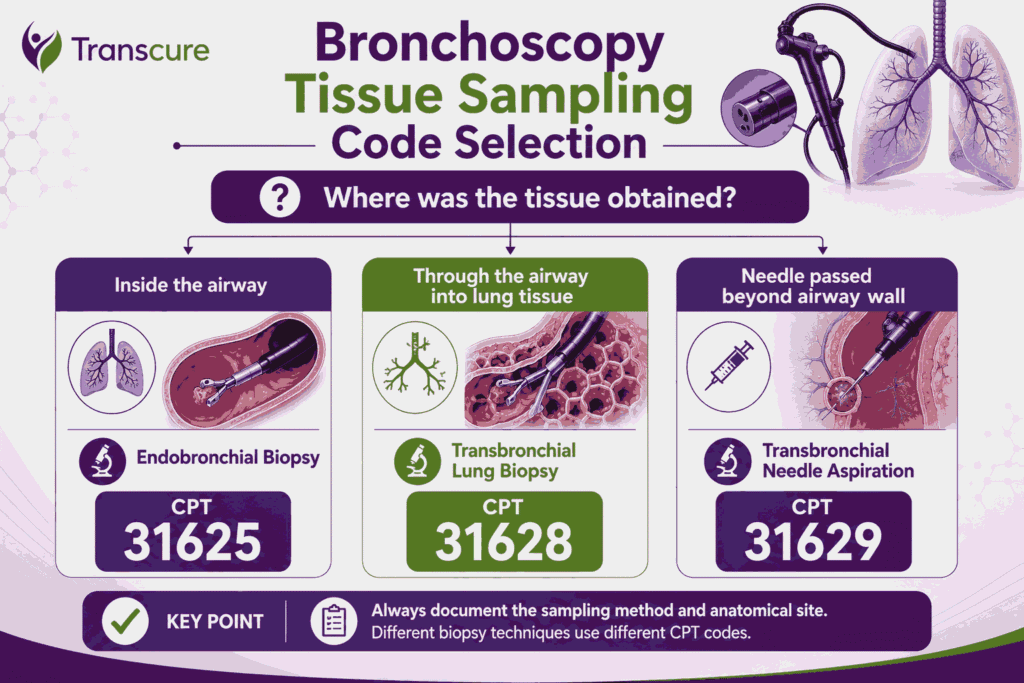
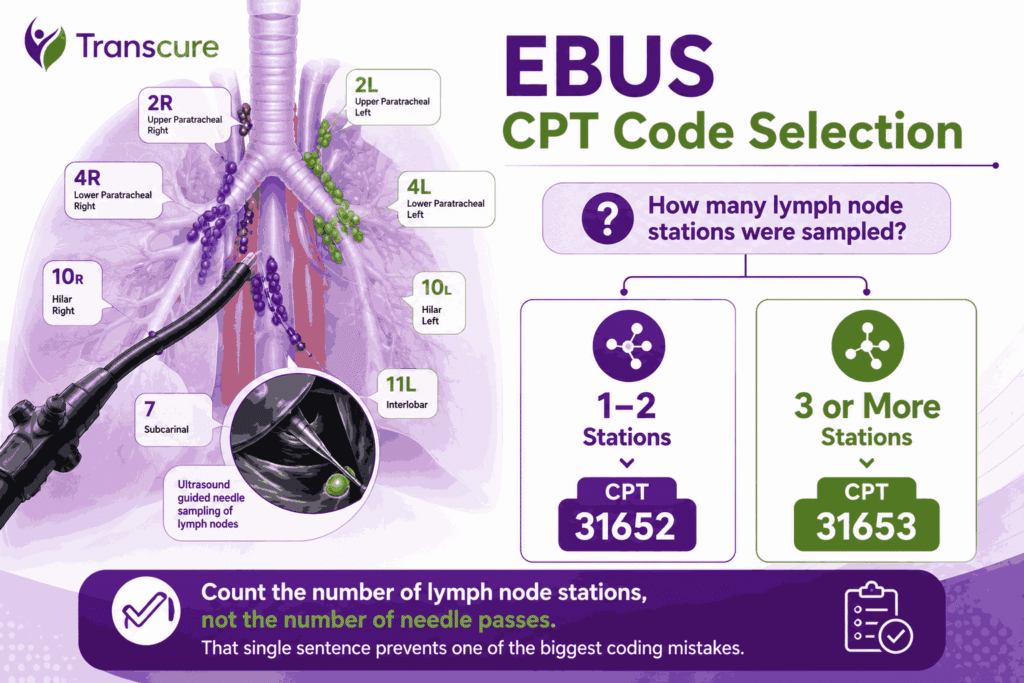
CPT 31625: Endobronchial Biopsy
CPT code 31625 covers bronchoscopy with an endobronchial biopsy. It is used when tissue is obtained directly from a visible lesion inside the airway. In addition, the operative report should identify the biopsy site and describe the tissue obtained.
CPT 31628: Transbronchial Lung Biopsy
31628 CPT code reports a transbronchial lung biopsy performed during bronchoscopy. Unlike 31625, this code is used when tissue is collected from the lung parenchyma rather than from the airway itself.
Its documentation should specify the biopsy location and the clinical indication to help distinguish this procedure from an endobronchial biopsy.
CPT 31629: Transbronchial Needle Aspiration (TBNA)
CPT code 31629 reports a transbronchial needle aspiration (TBNA) performed through the airway wall to obtain tissue from lymph nodes or adjacent structures.
The operative report should clearly identify the aspiration site and the tissue sampled. Documentation should also distinguish TBNA from an endobronchial biopsy because these procedures represent different sampling techniques.
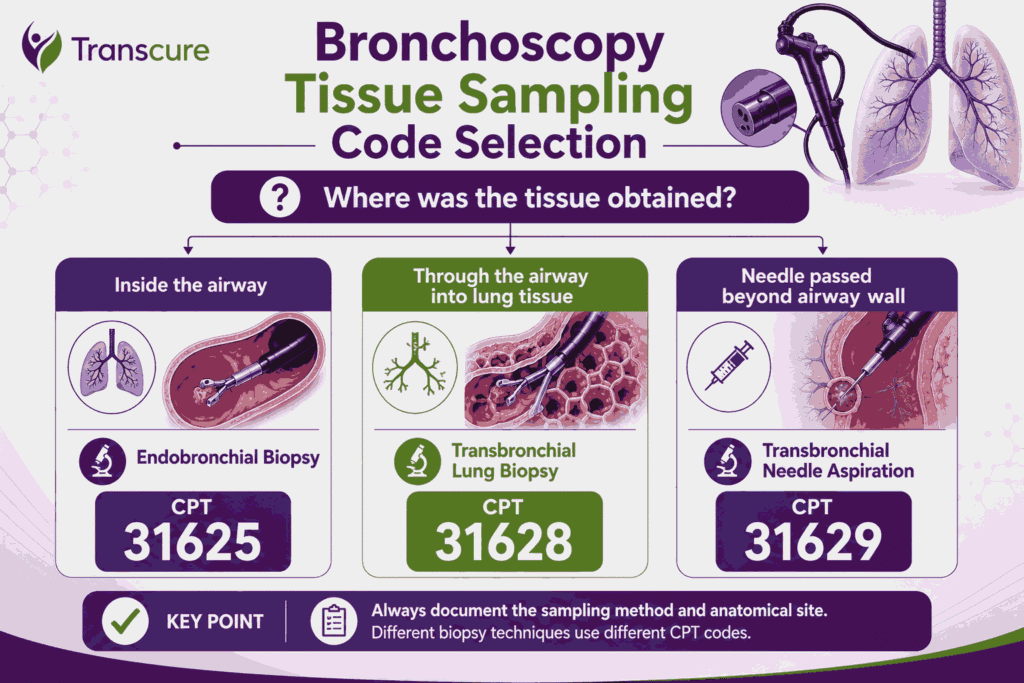
CPT 31652: EBUS-Guided Needle Aspiration (1–2 Stations)
31652 CPT code covers endobronchial ultrasound (EBUS)-guided transbronchial needle aspiration of one or two mediastinal or hilar lymph node stations.
The procedure note should identify every lymph node station sampled. The number of stations determines whether CPT 31652 or CPT 31653 is reported. Do not report both codes during the same procedure.
CPT 31653: EBUS-Guided Needle Aspiration (3 or More Stations)
31653 CPT code reports EBUS-guided sampling of three or more mediastinal or hilar lymph node stations. It replaces CPT 31652 when three or more stations are sampled during the same procedure.
Only one of these two codes should be reported based on the total number of lymph node stations documented.
CPT 31627: Navigational Bronchoscopy (Add-on Code)
CPT code 31627 is an add-on code that reports computer-assisted image-guided navigational bronchoscopy. It is commonly used with electromagnetic navigation or robotic bronchoscopy to guide instruments toward peripheral lung lesions.
Never report CPT 31627 by itself. It must always be billed with an appropriate primary bronchoscopy procedure.
Which Sleep Study CPT Codes Are Used in Pulmonology?
Sleep medicine CPT codes report diagnostic sleep studies, PAP titration, home sleep apnea testing, and CPAP equipment. Code selection depends on where the study is performed and the type of equipment prescribed.
CPT 95806: Home Sleep Apnea Test (HSAT)
CPT 95806 reports an unattended home sleep apnea test using multiple physiological monitoring channels. It is commonly reported for patients with suspected obstructive sleep apnea who qualify for home testing.
This code should only be reported when the study meets the required monitoring criteria. Most payers, however, do not cover home sleep studies for every sleep disorder, so the documentation should clearly support why HSAT was appropriate.
CPT 95810: Diagnostic Polysomnography
95810 CPT code covers a full-night attended diagnostic sleep study performed in a sleep laboratory. This code includes monitoring of sleep stages, airflow, respiratory effort, oxygen saturation, heart rhythm, and other physiologic parameters.
Remember not to report CPT 95810 when the same overnight study includes PAP titration. In that situation, use 95811 instead.
CPT 95811: Polysomnography With CPAP or BiPAP Titration
95811 CPT code is added for an attended overnight sleep study that includes CPAP and BiPAP titration. The study identifies the optimal pressure needed to treat obstructive sleep apnea during the same session.
Because PAP titration is already included, never report CPT 95810 and CPT 95811 together for the same overnight study.
How Do HCPCS Codes Fit with Sleep Study CPT Codes?
Sleep study CPT codes and PAP equipment HCPCS codes work together throughout the patient’s treatment journey. HCPCS E0601 (CPAP), E0470 (BiPAP), and E0562 (heated humidifier) report the equipment prescribed after a qualifying diagnosis.
A completed sleep study alone does not guarantee equipment coverage. Most payers require documentation confirming obstructive sleep apnea, medical necessity, and the physician’s treatment plan before approving the PAP equipment.
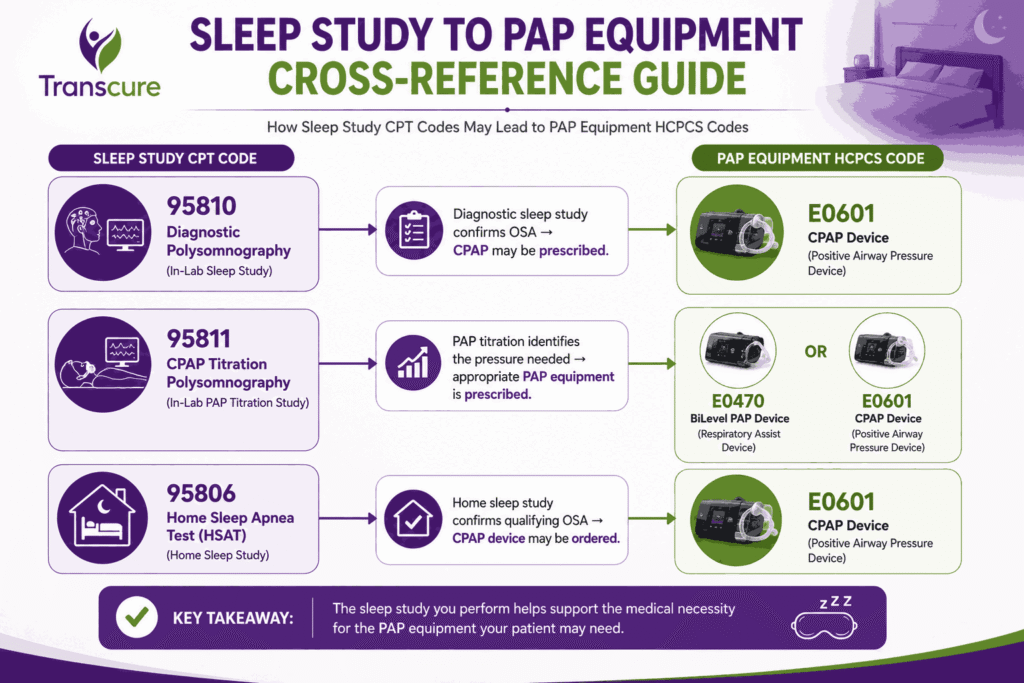
Home Sleep Test vs In-Lab Polysomnography: Differentiating the Need
Not every patient with suspected sleep apnea requires an overnight sleep study in a laboratory. Home Sleep Tests (HST) are generally appropriate for adults with a high probability of uncomplicated obstructive sleep apnea (OSA) and without significant cardiopulmonary or neurologic disease.
In contrast, in-laboratory polysomnography (PSG) is required for patients with central sleep apnea, hypoventilation syndromes, neuromuscular disorders, severe cardiopulmonary disease, or inconclusive home sleep study results.
The appropriate test based on the patient’s clinical presentation helps support medical necessity and reduces the risk of payer denials.
What CPT Codes Are Used for Thoracentesis & Chest Tubes?
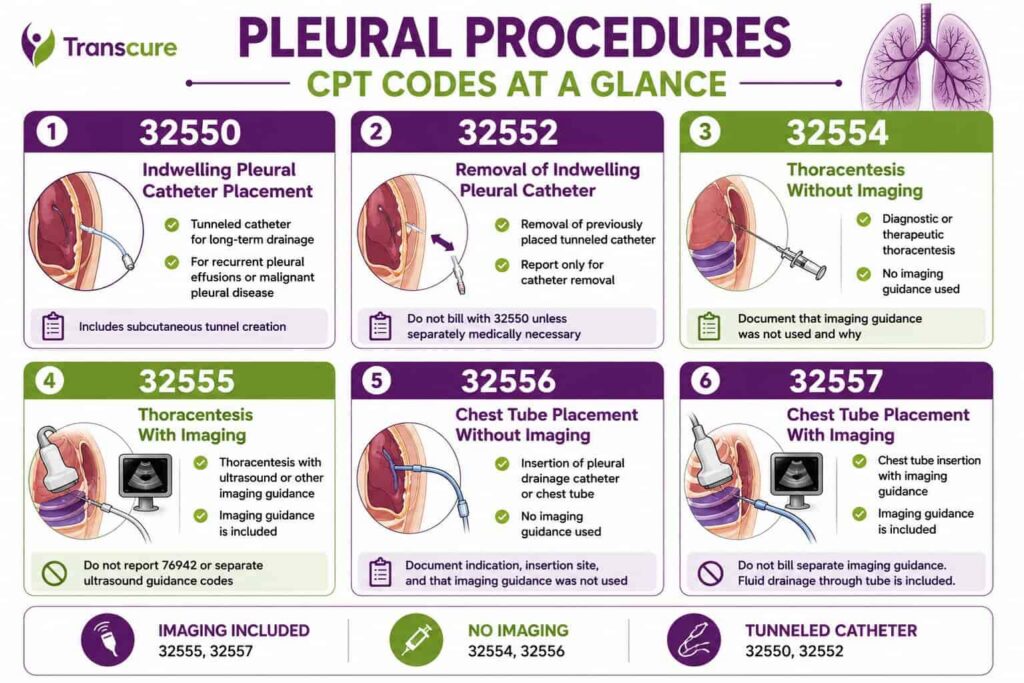
Thoracentesis and chest tube CPT codes report pleural fluid drainage, chest tube insertion, and long-term pleural catheter management. Factors affecting these codes include which imaging guidance was used, the type of catheter inserted, and if the procedure involves placement or removal.
CPT 32550: Indwelling Pleural Catheter Placement
CPT code 32550 covers placement of a tunneled indwelling pleural catheter for long-term drainage of recurrent pleural effusions or malignant pleural disease. The procedure includes creating a subcutaneous tunnel before inserting the catheter.
For a successful claim, the physician’s note should confirm that a tunneled catheter was placed and explain why long-term drainage was necessary.
CPT 32552: Removal of Indwelling Pleural Catheter
32552 CPT code is reported when a previously placed tunneled pleural catheter is removed. This service applies only to catheter removal. Avoid billing it with CPT 32550 during the same encounter unless the documentation clearly supports two separate medically necessary procedures.
CPT 32554: Thoracentesis Without Imaging Guidance
32554 CPT code is used for diagnostic or therapeutic thoracentesis performed without imaging guidance.
Because ultrasound guidance has become the standard of care, this code is reported less frequently today. The procedure note should clearly state that imaging was not used and describe the reason for the thoracentesis.
CPT 32555: Thoracentesis With Imaging Guidance
CPT code 32555 describes thoracentesis performed with ultrasound or other imaging guidance. The imaging guidance is already included in this code.
Do not bill a separate ultrasound guidance code such as 76942 with CPT 32555. If required by the payer, the medical record should also include permanent image documentation.
CPT 32556: Chest Tube Placement Without Imaging Guidance
CPT code 32556 applies to chest tube or pleural drainage catheter placement performed without imaging guidance. The documentation should identify the indication for the procedure, insertion site, and confirm that no imaging guidance was used during placement.
CPT 32557: Chest Tube Placement With Imaging Guidance
CPT code 32557 covers chest tube insertion performed with ultrasound or fluoroscopic guidance. Make sure not to report separate imaging guidance with this code. Likewise, if pleural fluid is drained through the newly inserted catheter, do not bill thoracentesis separately, as the drainage is considered part of the chest tube placement.
What Are Remote Patient Monitoring (RPM) CPT Codes?
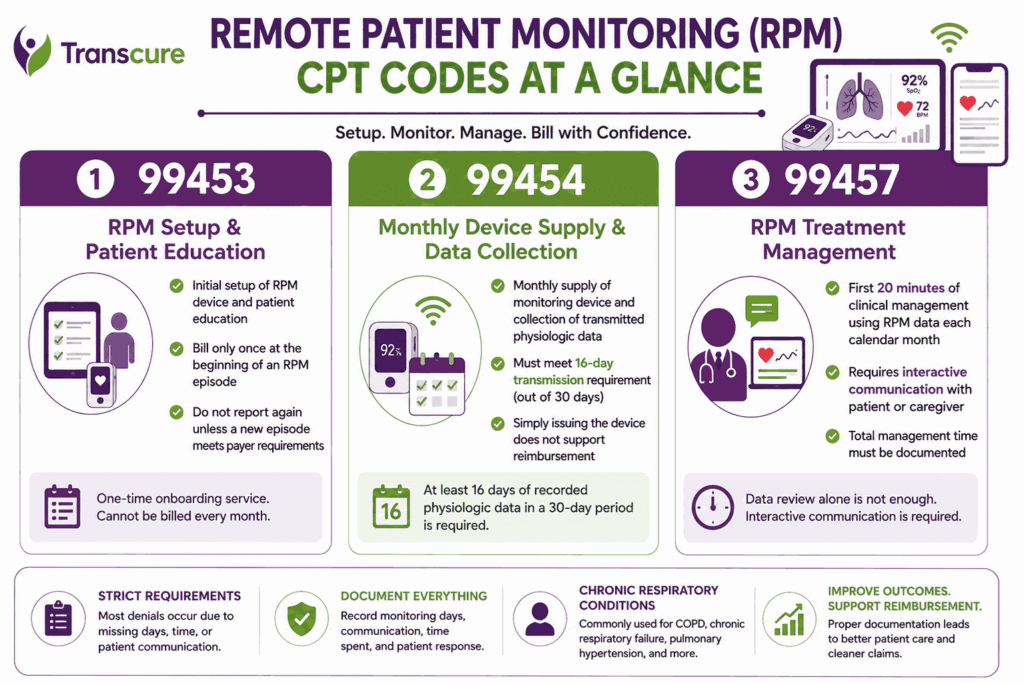
Remote Patient Monitoring (RPM) CPT codes cover the setup, supply, and clinical management of devices that collect physiologic data outside the office.
Unlike traditional office visits, RPM services have strict billing requirements. Most denials occur because practices fail to meet the required monitoring days, management time, or patient communication requirements.
CPT 99453: RPM Setup & Patient Education
99453 CPT code covers the initial setup of the remote monitoring device and patient education on its proper use before monitoring begins. Bill this code only once at the beginning of an RPM episode. Don’t report this code again unless a new monitoring episode meets payer requirements. Cannot be billed every month.
CPT 99454: Monthly Device Supply & Data Collection
99454 CPT code reports the monthly supply of the monitoring device and collection of transmitted physiologic data.
A common denial reason for this code is failing to meet the 16-day transmission requirement. Medicare and many commercial payers require at least 16 days of recorded physiologic data within 30 days prior to this code becoming billable.
CPT 99457: RPM Treatment Management
CPT code 99457 describes the first 20 minutes of clinical management provided during a calendar month using remotely transmitted physiologic data.
This service requires interactive communication with the patient or caregiver. Reviewing the transmitted data alone does not satisfy CPT requirements. The total management time should also be documented to support the service.
Evaluation & Management (E/M) CPT Codes for Pulmonology
Evaluation and Management (E/M) CPT codes report office visits where physicians evaluate a patient’s conditions, review medical history, and make treatment decisions. E/M codes reimburse the physician’s cognitive work rather than a specific test.
Code selection depends primarily on the level of medical decision-making (MDM) or the total physician time spent during the encounter.
New Patient Office Visit Codes (99202–99205)
Always use the codes below when the patient has not received any professional service from the same physician or another physician within the same practice during the last three years.
| CPT Code | Total Time | MDM Level |
|---|---|---|
| 99202 | 15–29 minutes | Straightforward |
| 99203 | 30–44 minutes | Low |
| 99204 | 45–59 minutes | Moderate |
| 99205 | 60–74 minutes | High |
Billing Tip: Select the code based on Medical Decision Making (MDM) or total physician time documented for the encounter, not both. History and physical examination alone no longer determine the code level.
Established Patient Office Visit Codes (99211–99215)
Use these codes when the patient has received services from a physician of the same specialty within the same group practice during the previous three years.
| CPT Code | Total Time | MDM Level |
|---|---|---|
| 99211 | N/A | Minimal service |
| 99212 | 10–19 minutes | Straightforward |
| 99213 | 20–29 minutes | Low |
| 99214 | 30–39 minutes | Moderate |
| 99215 | 40–54 minutes | High |
Usually, Modifier 25 is appended to an E/M service when a separately identifiable office visit is performed on the same day as another procedure. The documentation must clearly show that the E/M service went beyond the usual pre- and post-procedure work.
What Are the CPT Code Updates for Pulmonology Billing?
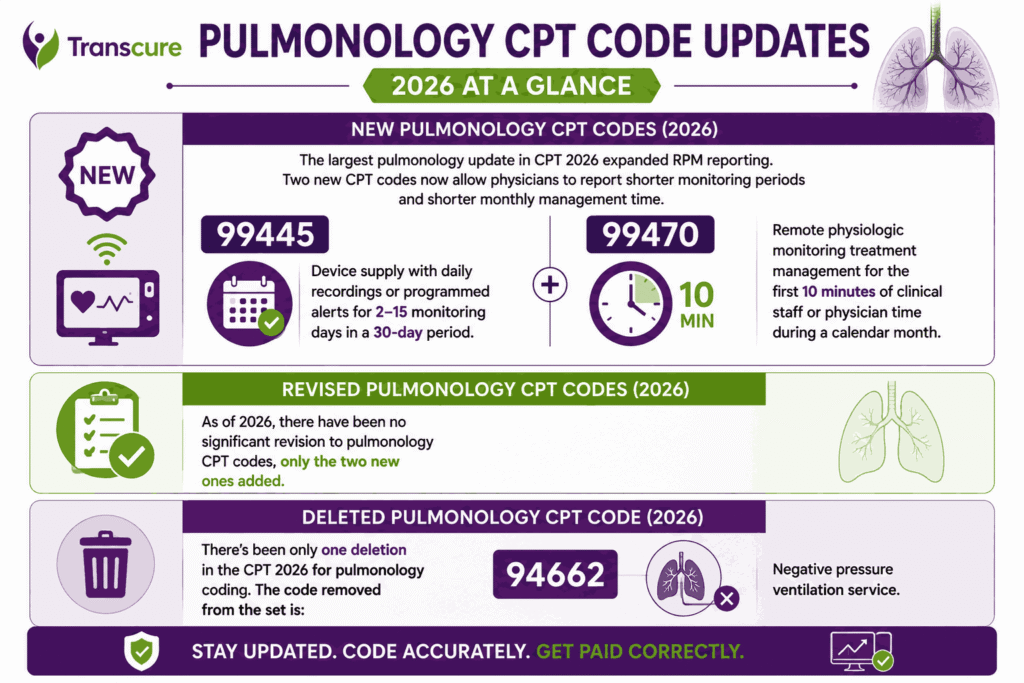
The CPT 2026 code set introduced 418 total updates, including 288 new codes, 46 revised codes, and 84 deleted codes. However, the respiratory or pulmonology billing section of the code set did not have a dramatic addition or revision. The ones added or deleted are:
New Pulmonology CPT Codes
The largest pulmonology update in CPT 2026 expanded RPM reporting. Two new CPT codes now allow physicians to report shorter monitoring periods and shorter monthly management time.
These codes include:
- 99445: Device supplied with daily recordings or programmed alerts for 2–15 monitoring days in 30 days.
- 99470: Remote physiologic monitoring treatment management for the first 10 minutes of clinical staff or physician time during a calendar month.
Revised Pulmonology CPT Codes
As of 2026, there have been no significant revisions to pulmonology CPT codes, only the two new ones added.
Deleted Pulmonology CPT Codes
There’s been only one deletion in the CPT 2026 for pulmonology coding. The code removed from the set is:
- 94662: Negative pressure ventilation service.
Quick Overview of Common Pulmonology Modifiers
Modifiers provide additional information about how a service was performed without changing the CPT code itself. Incorrect use of modifiers is one of the leading causes of claim denials, downcoding, and payer audits.
Below are the modifiers pulmonology practices use most often.
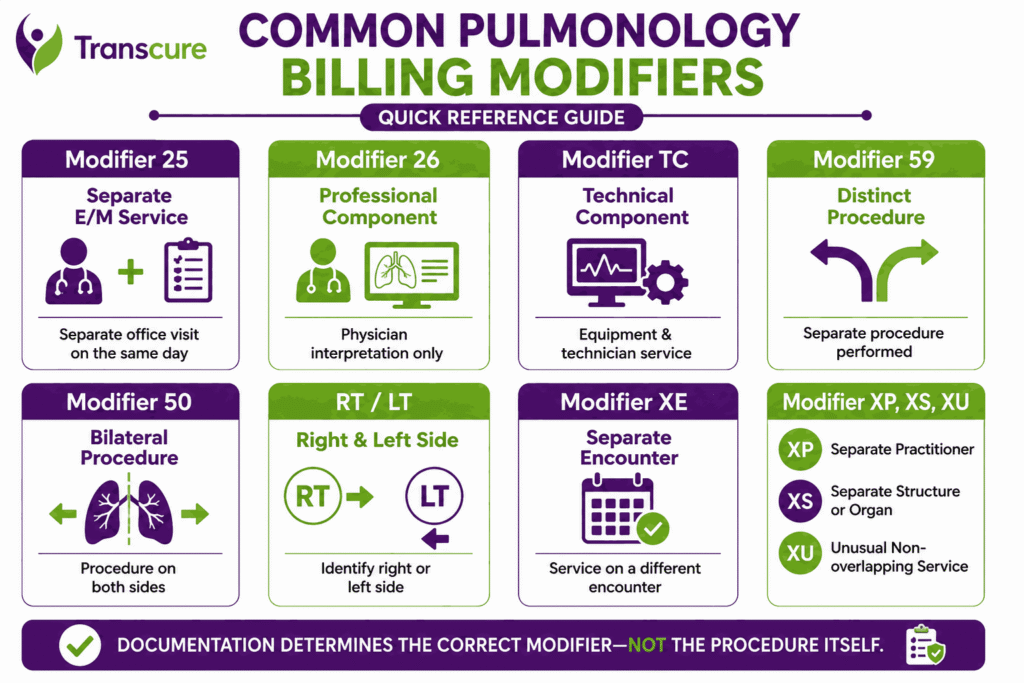
Modifier 25: Separately Identifiable E/M Service
Use Modifier 25 when a physician performs a medically necessary office visit on the same day as another procedure.
For instance, if a patient is evaluated for worsening COPD symptoms and spirometry is also performed during the visit. In that case, the E/M service may qualify for Modifier 25 if the documentation supports work beyond the spirometry itself.
Modifier 26: Professional Component
Modifier 26 identifies the physician’s professional interpretation when the technical portion of a diagnostic test is performed by another facility.
Pulmonologists commonly report Modifier 26 with diagnostic imaging or pulmonary testing when they only interpret the results and do not own the equipment.
Modifier TC: Technical Component
Modifier TC reports the technical portion of a diagnostic service, including equipment, supplies, and technician time. This modifier is generally used only when the practice owns the testing equipment and bills separately for the technical component.
Modifier 59: Distinct Procedural Service
Modifier 59 indicates that two procedures normally bundled together were performed as distinct and separately identifiable services.
Use this modifier only when documentation clearly supports separate procedures performed at different sites, different sessions, and for different clinical reasons. Improper use of Modifier 59 is closely monitored by Medicare and commercial payers.
Modifier 50: Bilateral Procedure
Modifier 50 reports procedures performed on both sides of the body during the same encounter when the CPT code allows bilateral reporting. Always verify payer policy before appending Modifier 50, as some payers require billing with RT and LT modifiers instead.
Modifier 53: Discontinued Procedure
Modifier 53 is used when a procedure is started but cannot be completed because continuing would place the patient at risk. In pulmonology, this most commonly applies to bronchoscopy that is discontinued due to complications such as hypoxemia, significant bleeding, arrhythmias, or poor patient tolerance.
The operative note should clearly document why the procedure was terminated and the clinical circumstances that made completion unsafe.
RT & LT Modifiers
The RT and LT modifiers identify procedures performed on the right or left side of the body. Although they are used less frequently in pulmonology than in many surgical specialties, certain thoracic and pleural procedures may require laterality when specified by the payer.
Modifier XE, XP, XS & XU
Medicare introduced the X{EPSU} modifiers as more specific alternatives to Modifier 59.
- XE: Separate encounter
- XP: Separate practitioner
- XS: Separate structure or organ
- XU: Unusual non-overlapping service
Many commercial payers still accept Modifier 59, but Medicare may prefer an X modifier when it better describes the circumstance.
Common Pulmonology Coding Errors (with Solutions)
Even experienced pulmonology practices lose revenue due to preventable coding errors. Most claim denials occur due to missing documentation, incorrect code combinations, modifier misuse, or failure to meet payer requirements.
Here are the most common coding errors in the table below, along with why they happen and how you can fix them.
| Coding Error | Why It Happens | How to Fix It |
|---|---|---|
| Billing 94010 with 94060 | CPT 94060 already includes pre- and post-bronchodilator spirometry. | Report 94060 only. Do not bill 94010 separately. |
| Missing Modifier 25 | A separate E/M service is performed but not identified correctly. | Append Modifier 25 only when documentation supports work beyond the procedure. |
| Billing ultrasound separately with 32555 | Imaging guidance is already included in the code. | Do not report a separate ultrasound guidance code. |
| Billing thoracentesis with 32557 | Fluid removal is part of chest tube placement. | Report only the chest tube code when drainage occurs through the newly inserted catheter. |
| Selecting the wrong E/M level | The visit level does not match the documented MDM or physician time. | Choose the code using documented MDM or total encounter time. |
| Missing physician interpretation | Diagnostic tests are performed but not formally interpreted. | Include a signed interpretation whenever required by the CPT code. |
| Failing RPM monitoring requirements | RPM codes are billed before monitoring thresholds are met. | Verify monitoring days, management time, and patient communication before submitting the claim. |
| Missing medical necessity | Documentation does not justify why the service was performed. | Clearly document symptoms, diagnosis, clinical findings, and treatment decisions. |
FAQs
What are the Most Commonly Used Pulmonology CPT Codes?
The most commonly used pulmonology CPT codes include 99213–99215 for office visits, 94010 and 94060 for spirometry, and 94726 and 94729 for pulmonary function testing. Other frequently reported codes include 31622–31625 for bronchoscopy, 95810 and 95811 for sleep studies, and 99291–99292 for critical care services.
Can Pulmonary Function Tests and an Office Visit Be Billed on the Same Day?
Yes. An office visit and pulmonary function testing can often be reported on the same date when both services are medically necessary. If the physician performs a separately identifiable E/M service beyond the work associated with the test, the E/M code generally requires Modifier 25.
What Is the Difference Between CPT 94010 and CPT 94060?
CPT 94010 reports diagnostic spirometry, while CPT 94060 covers spirometry performed before and after bronchodilator administration. Since CPT 94060 already includes diagnostic spirometry, CPT 94010 should not be billed separately during the same encounter.
Can Pulmonologists Bill Critical Care Codes with Other Procedures?
Yes, but only when CPT guidelines allow separate reporting. The documentation must clearly distinguish the time spent providing critical care from the time spent performing separately billable procedures. Procedure time generally cannot be counted toward critical care time unless specifically allowed by CPT guidelines.
Do Medicare and Commercial Payers Use the Same Pulmonology CPT Codes?
Yes. Both Medicare and commercial insurers generally use the same CPT code set. However, coverage policies, prior authorization requirements, reimbursement amounts, frequency limits, and documentation requirements often differ between payers.
Why Is My RPM Claim Denied Even Though the Patient Used the Monitoring Device?
Using the device alone does not make the service billable. CPT 99454 generally requires at least 16 days of transmitted physiologic data within 30 days. Meanwhile, 99457 requires documented treatment management time and interactive communication with the patient or caregiver.